The homeless population is graying

(Reading time: 7 minutes)

As the number of people pushed into homelessness keeps growing, a worrisome subset of that population is expanding at an even faster pace. Locally, we’re not paying nearly enough attention.

Nationwide, there are more than 16 million people 65 or older living by themselves. That represents 28% of our oldest age group, and the older you are, the higher the likelihood you’re living alone: more than half of households with someone 75 and older consist of only one person.

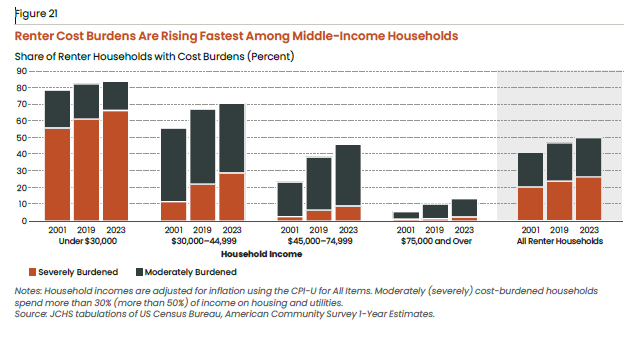
Being old and alone doesn’t necessarily result in homelessness, of course, but it does increase the odds considerably. Living alone is riskiest for the elderly, who tend to have more accidents, are more prone to neglect their health and are frequent targets of financial scams, all of which can result in the loss of a home. And while many Baby Boomers are living in comfortable retirement, 5 million people over 65 live below the poverty line and an additional 2.6 million were classified in 2020 as “near poor,” meaning their incomes were less than 25% above the poverty line—and far below the amount needed to rent an apartment.

Put it all together, and the number of elderly people becoming homeless for the first time is swelling. Add that to the number of chronically homeless people who are “graduating” into the older population, and the ranks of elderly homeless people are growing to levels not seen in decades. The 2024 national Point in Time (PIT) census, the most recently available, found more than 146,000 homeless people who were 55 or over, or 18.9% of the 771,480 total. And here’s the kicker: more than half of those elderly homeless people were unsheltered, compared with just 36% of the overall homeless population.

Locally, the percentages are even more skewed, in keeping with a population that on average is older than at either national or state levels. (In Staunton, we have more people over the age of 65 than we have under 18.) That same 2024 PIT count, conducted by the Valley Homeless Connection, found 47 people ages 55 and older who were homeless, or roughly 26% of the total. Eight were unsheltered, sleeping in cars, a church vestibule and other make-shift accommodations.

Why do elderly homeless people sleep on the street rather than in a shelter? One obvious reason is that there aren’t enough shelters to go around. In recent weeks, for example, the emergency shelter space offered by the Waynesboro Area Relief Ministry (WARM) has been fully subscribed, with 60 or more people filling both primary and overflow churches.  But even when shelters are available, they often aren’t a good match for a population with mobility and other health issues. Getting in and out of bunks, such as those used at Valley Mission; managing medications, like insulin, that might need refrigerating; or making it to a shared bathroom in time for those with incontinence issues, are just some of the major challenges facing older people.

Conversely, older people are more wary of entering shelters because they recognize how vulnerable they are, and because of their generally lower tolerance for conditions that a younger, more resilient population can handle more readily. The National Alliance to End Homelessness, for example, cites the biggest reasons given by people for avoiding homeless shelters as overcrowding (37%) and the related issues of bugs (30%) and germs (22%).

But recognition of the special needs of an elderly homeless cohort has been slow in coming. The national PIT count, for example, only recently started breaking out the age demographics of those it surveys, after years of lumping everyone older than 24 into one giant category. USAging, a national organization that issues periodic assessments of services for the elderly, as recently as 2020 limited its housing focus primarily to home modifications and repairs that help older adults stay in their homes, thereby preventing homelessness. Last year’s report, on the other hand, finally acknowledged a deeper problem, observing that “more older adults are experiencing housing instability or even homelessness,” the insertion of “even” suggesting a previously unimagined condition.

USAging’s findings are based on a national survey of what are known as Area Agencies on Aging, or AAAs, which were established throughout the country by Congress in 1973 to respond to the needs of Americans age 60 and older. Its 2025 Chartbook includes a new “spotlight” on housing issues that charts “the top housing-related challenges facing older adults.” Number one on the list, submitted by 94% of the AAAs, is a lack of affordable housing, while more than a third (35%) cited “increasing homelessness” as among their top dozen concerns.

That concern, however, has yet to filter down to this part of Virginia in any meaningful way. Our local AAA is the Valley Program for Aging Services (VPAS), which serves a five-county area and its cities, including Augusta, Staunton and Waynesboro. Among its better-known programs are Meals on Wheels, but VPAS also helps the elderly with case management services, Medicare counseling, respite and transportation services, and health and wellness programs. When it comes to housing, however, VPAS comes up blank. Its strategic plan for 2025-2027 doesn’t even mention the word.

VPAS executive director Beth Bland said last week that her agency is “certainly aware” of the housing issue, but contended that the problem is “bigger than any one organization can tackle” and added that VPAS doesn’t have the financial or staffing resources to make a difference. Asked why VPAS doesn’t at least provide leadership in bringing community attention to the problem, Bland demurred. “We are not prepared to be, nor would it be appropriate for us, to take the lead on this issue,” she replied, suggesting that the Community Fund is already doing this. The Community Fund, alas, while it has tried to put a spotlight on the overall lack of affordable housing, has had little to do with homelessness.

Putting aside Bland’s unwillingness to have VPAS take the lead on an issue that clearly falls within the AAA mandate, it’s only fair to acknowledge that the local agency is squarely within the national mainstream. As documented in the 2025 Chartbook, only 8% of the nation’s AAAs have a formal partnership with homelessness or emergency shelters, 7% with coordinated entry systems for the homeless and 6% with an affordable housing coalition. The problem of old people living on the streets apparently will have to become much more egregious before we start paying attention.

There is one slim ray of hope locally, although it’s still many, many months from fruition. The Staunton city council last week approved a rezoning request for a property on West Beverley that has been vacant for at least the past 40 years, changing it from an R-4 to a B-5 zoning category. The R-4 category had frustrated multiple development proposals over the years because of its parking requirements—requirements that are much looser in a B-5 zone, so poof! a bureaucratic hurdle was vanquished just like that. Sometimes all it takes is someone with vision to make things happen.

The rezoning clears the way for the former Dunsmore Business College to be redeveloped as 15 one-bedroom apartments for “extremely low-income” senior citizens. The project is being led by Stu Armstrong, a former Staunton resident who owns the brick building and has a history of renovating other residential properties in the Newtown area. Although he estimates the renovation will cost at least $3 million, Armstrong says he can raise sufficient capital through multiple layers of grants, federal housing programs and private equity funding—and a good thing, too, because if he had to cover his costs through rent income, the apartments would have to list for approximately $2,000 a month.

To be sure, were those apartments available today, they would make only the slightest dent in demand. The Staunton Redevelopment Housing Authority, which is lending its support to Armstrong’s efforts, has a waiting list for its subsidized apartments that includes 137 elderly people with annual incomes, on average, of slightly under $14,000. That’s not enough to rent anything in today’s market. But even if Armstrong’s project reduces the housing authority’s waiting list by just 10%, that’s 15 people who otherwise could very well end up on the street.

And maybe, just maybe, Armstrong’s success could point the way for others to follow suit. Let’s wish him well, because the need he’s addressing is only going to keep growing as all of us keep aging.

Put your money where your mouth is

(Reading time: 5 minutes)

If you want to understand a person’s core values and priorities, don’t listen to what they say: look at how they spend their money. Cash has a more honest vocabulary than cheap words.

As much can be said for governments. Staunton is now formulating its spending plans for the next fiscal year, and they speak volumes about the problems and opportunities the city recognizes—and those it chooses to ignore or simply not see. Anyone thinking of living in the city beyond next year should be looking at those numbers and realizing what they mean, for them and for their neighbors. What does our municipal spending say about what we think is really important?

Much of the city’s annual budget is devoted to operating expenses—paying for past decisions—but it also includes a Capital Improvement Plan that in many cases accounts for decisions yet to be made. Known informally as the CIP, this running five-year wish list that gets updated annually describes what city planners think we need, how much they think it will cost and how they think we should pay for it. To see their conclusions, you can review the current 153-page draft online, or you can attend the Feb. 19 meeting of the city’s planning commission at city hall, where it will hold a public hearing on the CIP before submitting it to city council a week later.

What’s in the CIP? A tad over $47 million in spending, which is a $3.4 million increase over the five-year plan adopted by city council just a year ago. Where that money is to be spent can be loosely grouped into three categories. One is the things for which Stauntonians have been clamoring for years, such as more sidewalks, improved park facilities, revitalization of the West End and Uniontown, etc. A second is things that the people who run and operate our city say they need to do their jobs more effectively, from relocating the police department from city hall to a yet-to-be-built headquarters building (with an estimated price tag of $23.4 million), to buying new fire trucks and maintenance vehicles, to reroofing various city facilities. Both those categories have some wiggle room, since they’re largely based on “good or even prudent to have or do” items but are not “essential must-haves right now.”

The third general category is less forgiving, encompassing either imminent or already real infrastructure failures. The current poster child for this category is the flood-damaged tunnels in the Wharf district, for which the CIP is reserving $8 million for repairs. That’s a strong statement about how the Wharf district is viewed as a critical aspect of the city’s commercial and economic health, and it’s hard to rebut that premise.

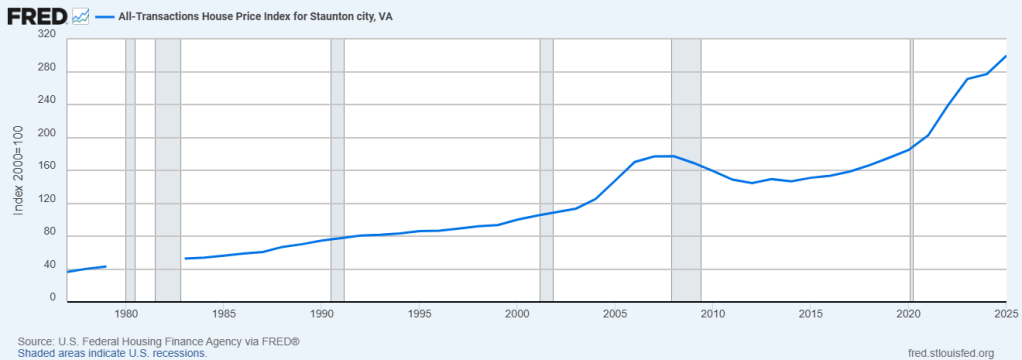
But now consider that the CIP proposes to set aside a mere $250,000 for its “affordable and workforce housing fund,” which was established last year in response to the city council’s “Staunton Plan,” in which “affordable housing and housing for working families was prioritized.” It’s not unreasonable to observe that reserving less money over six years than would suffice to buy a single average-priced home in Staunton suggests the city’s “priorities” in this case exist primarily on paper—a perception strengthened by the laziness that went into crafting the description of this initiative, which was lifted directly out of last year’s CIP and so describes future events that have already happened.

A further indication of how this is a token effort is seen when the stingy housing fund is contrasted with, oh, I don’t know—how about the $360,000 reserved over the same six years to buy new golf cars? I don’t play golf, but I have nothing against spending tax dollars on golf cars that become a revenue generator, and which provide yet another amenity that makes Staunton a special place for so many people. The problem is that amenities fall into the “nice to have” bucket, whereas affordable housing veers perilously close to the bucket into which we put the city’s commercial and economic health.

So there are problems with how capital improvements are balanced against each other. But an even bigger problem is how some capital spending is avoided altogether, despite what might appear as a screaming need to address an issue before it becomes a full-blown crisis. Exhibit A in this regard are the unfunded projects in the water fund CIP, which is separate from but issued in tandem with the much larger general-fund CIP. Those projects—there are four of them—are not only unfunded but also unscheduled, despite appearing in the CIP year after year, presumably because no one has been willing to tackle the ginormous problem of finding an extra $50 million or so to ensure Staunton’s water supply remains uninterrupted.

That water supply is delivered via 16- and 20-inch cast iron mains that are now 100 years old, which is at or beyond their expected service lives. Half of the water Staunton consumes is piped from a reservoir in the George Washington National Forest, 14 miles away. Replacing that pipeline, plus the one that feeds the city from Gardner Springs, would cost an estimated $41.5 million. Developing a backup well system to tap groundwater in a crisis, as recommended in a 2018 study that the city commissioned, would cost an additional $7,950,000—and while that may seem like an unnecessary “extra,” it bears pointing out that our part of the state is already under a drought warning.

Springs can run unexpectedly dry. So can reservoirs, at which point it will be a little late to start wishing the city had drilled those wells. But it’s all too tempting to kick big projects and capital expenditures like this down the road, when some other city council will be forced to deal with it—and with the angry city residents who will be demanding to know why there had been no planning for such a predictable calamity. The short answer will be that it was easier to respond to the many more voices lifted on behalf of other, cheaper improvements.

We’re not moving the needle

(Reading time: 5 minutes)

Maybe it’s just the cold that’s slowing everything down, with much of Staunton still sheathed in so much ice it could be the setting for “Dr. Zhivago.” Nearly two weeks after a devastating winter storm hit the region, we’re still digging out and only weakly reestablishing life’s normal routines. A lot of important things have been put on hold.

But attention fatigue and disengagement with issues of affordable housing and homelessness, of such prominent concern in 2023 and 2024, had already set in before the storm.  Where once scores of people attended the two housing summits hosted by the Community Foundation of Central Blue Ridge and the Community Action Partnership of Staunton, Augusta and Waynesboro, only a few dozen soldiered on in two working groups that were spun off to address issues of housing stability and housing stock. Monthly workgroup meetings soon bogged down into every-other-month events, attendance dwindled, the focus blurred.

Most recently, when the oncoming storm threatened a housing stock working group meeting scheduled for last week, the meeting was scrubbed altogether. Not postponed for a week or two, which one might expect if weather were the only problem, but canceled outright. That created a four-month gap between meetings, but it’s doubtful anyone views that as a problem—not when there’s so little to show for the past two years.

Then there’s the much-heralded Staunton Housing Commission, which after a similarly lengthy gestation, was scheduled to meet for the first time in early January. Instead, supposedly because just six of its nine members have been appointed to date, the commission’s inaugural meeting will occur later this month. Or maybe in March. With only four meetings per year, there’s really no rush—although it’s fair to ask how this leisurely pace fits in with the city’s “housing strategy,” for which an 18-month clock started ticking last July 1, and for which the housing commission was to be the lead advisory board.

And here’s an ironic twist: the Point in Time (PIT) count, which attempts to enumerate all the homeless people who can be found on one specific night per year, was scheduled for last Wednesday. But because of the extreme cold and generally impassable roads, any homeless people who might have been stuck in their cars, tents or other improvised shelters were given a pass—the only ones who (were) counted were those who reached homeless shelters, like Valley Mission or that week’s WARM emergency facility, which was in Waynesboro. So the “good news” in this year’s PIT count will be that 100% of those who are homeless were sheltered—no unsheltered people were found!

We may hope there will be an asterisk after those numbers.

One good thing that did come out of the storm was a last-minute, hastily assembled temporary emergency shelter thrown together by Staunton Mayor Michele Edwards—although she did so, she struggled to explain, as a private citizen and not as a city official. At least I think that’s the distinction she was trying to draw. Housed in the basement of the Central United Methodist Church, the emergency shelter was full to its limited capacity right up until it closed this past Monday morning, when presumably the emergency was over and the “temporary” aspect of its existence kicked in.

Anyone looking at a landscape torn from Boris Pasternak’s novel might have been puzzled—local schools wouldn’t reopen for another couple of days, after all—where the people who had stayed at the Central United shelter would go that day, or even that night, but that’s how the icicle crumbled. As Edwards emphasized, “temporary means temporary.”

The thing that’s clearly not temporary is Staunton’s ongoing lack of sufficient affordable housing, which persists despite the two years of chin-wagging mentioned above. Also not temporary is the lack of additional resources to cope with the inevitable consequences of that housing shortage. The emergency shelter program operated by WARM has an increasingly shaky roster of local churches willing to have their facilities used for a week at a time. The Mission continues to be backed up, as its supposedly short-term residents are unable to find permanent housing. And despite months of shambolic efforts at creating a day shelter for the homeless, we’re no closer to having one today than we were a year ago.

All that talking and meeting and feel-good assertions of what we’re going to do have made not one bit of progress in either stemming the tide of homelessness or of providing for the most basic needs of the unsheltered. We’ve just been treading water.

The online meeting that came up with an eleventh-hour plan to create an emergency shelter for the homeless took place two weeks ago today. There was much agreement, among the dozen or so participants, that this stop-gap measure should serve as a teaching moment—that the lessons learned from this intervention should result in better planning for the next emergency. Doing so, it was remarked both at the meeting and in subsequent emails, would be best served by sharing insights and observations as soon as possible after the fact, while memories were still fresh.

Two weeks later, and a week after the emergency shelter was closed, that conversation has yet to take place. The temperature tomorrow night is predicted to drop back into single-digits, and the ice and snow won’t melt significantly until mid-week, when the climate rollercoaster we’re riding may push us into the 50s. It is not outside the realm of possibility that when the melt occurs it will uncover someone who did not make it to a shelter, who was not found by a non-existent PIT count, who believed with good reason that there really was no refuge to be had.

That would be depressing, if, we may hope, unlikely. What’s more depressing, precisely because it is more likely, is the thought that a year from now essentially nothing will have changed.

The deadly combination of fire, ice

(Reading time: 2 minutes)

There are many ways to be miserable when winter turns this extreme, but one of the worst is to be called out to fight a house fire. Such calls more often come at night, when the temperature is at its most frigid, because people do stupid or desperate things to stay warm and the physics of their efforts gets away from them: overloaded extension cords, space heaters too close to flammable objects—whatever.

For the volunteer and career firefighters that end up responding, the result is a treacherous landscape of icy footing, back-spray from hoses that freezes on everything it touches, bone-numbing cold that deadens reflexes. Everything is heavier and slipperier than it should be, face masks are blurred by ice, icicles hang from helmets and fire apparatus. Fire ahead, ice all around. What could be more hellish?

Well, try this on for size—a little thought experiment. Next time you’re driving around, today or tomorrow, see how many fire hydrants you can spot.

If you live in the city, you know they’ve got to be out there. And if you’ve been paying attention, you might even know the location of the hydrant closest to your home—but that doesn’t mean you’ll see it. Odds are, it’s buried under an increasingly impenetrable mound of snow and ice, thrown up by snowplow drivers more intent on clearing the streets than on maintaining access to the lifeline you’ll need if it’s your house that catches fire tonight. And while you could get out there with a pickaxe and a shovel and dig out the hydrant, chances are you haven’t given it a thought.

You should. You really should. The time to make your nearest hydrant accessible is before a fire breaks out, not when it’s already underway and every second wasted in an effort to create a hydrant connection means that much more loss to the flames.

The city was quite diligent in reminding everyone, early days, about its ordinance requiring that sidewalks be shoveled clean within 24 hours but made no mention of ensuring access to fire hydrants. And while the Virginia Statewide Fire Prevention Code requires that “a 3-foot (914 mm) clear space shall be maintained around the circumference of fire hydrants,” the city’s fire marshal has shown no sign that he intends to enforce the rule.

So go ahead. Take a look around. This one’s on you. If there’s a hydrant in front of your house—or in front of your neighbor’s house, or the house beyond that—that’s entombed within a block of chunked ice, it’s your home that’s at risk. That problem isn’t going to fix itself.

What we should be learning

(Reading time: 9 minutes)

Four degrees this morning, according to my outside thermometer, which with a mild breeze of six miles per hour pushes us into sub-zero wind chill territory. That white stuff on the ground stopped being snow—if it ever was that—several days ago, compressing into an ice cap you can walk across without breaking through the crust. The city finally realized that this is not your normal snowstorm and brought in massive farming and road-building machinery to break up the ice still coating most roads, impervious to workaday snowplows mounted on pickups and garbage trucks. The deep freeze will extend into next week.

And yet, this could have been far worse. Had we had a widespread power outage, caused by storm-toppled transmission poles or a fried substation, many hundreds of city residents would have faced a life-threatening situation. No heat, no light, and often no way to get out of the house to seek help—if any help could be found. In many cases, the extreme cold would have resulted in burst pipes, which not only would have meant no water now but too much water later, when a thaw eventually arrives. And those in greatest danger, as always, would have been the most vulnerable: the elderly and disabled, those relying on medical devices, families with small children.

What would they have done? Who could they have called, and what help would have been provided?

A day before the storm hit, the city put out a press release announcing that it had declared a state of emergency. This apparently was intended to provide some kind of assurance that matters were well in hand, with references to the activation of an Emergency Operations Plan and a claim that it “removes any barriers to our response efforts and allows us to mobilize additional resources, if necessary.” Just what that was supposed to mean for the average Staunton resident was never explained, however, and aside from advising people to call 911 in an emergency, the only direct communication to the public was a stern reminder about shoveling out the sidewalks. As if!

Meanwhile, the city’s lack of foresight and advance emergency planning was captured in microcosm by its response to the unsheltered residents who live on our streets—which is to say, no municipal response at all. Whatever resources are unleashed by the Emergency Operations Plan, apparently none are extended to people sleeping in their cars or huddled in a tent somewhere. If a declared state of emergency is in any way meaningful, that umbrella doesn’t cover those who need it most.

That’s not to say nothing was done. To her enormous if paradoxical credit, Michele Edwards spearheaded a mobilization effort last week to find, transport and shelter the homeless before they froze to death—but she did so as a private citizen, not as the city’s mayor. Edwards’ initial outreach was an email, written “with urgency and with hope,” to approximately 40 local religious leaders, homeless advocates and social service agencies, seeking their help “in an 11th-hour effort to protect life and dignity.” But as Edwards also made clear, “I am writing as a local government leader, and I’m not representing the City of Staunton. So, I am not writing with local government solutions.”

Why this official hands-off policy was necessary was not explained. Equally inexplicable was the distinction Edwards drew between acting as a local government leader and as a representative of the City of Staunton: is not the local government she leads that of Staunton?

That confusion aside, Edwards’ outreach resulted in roughly a dozen participants meeting online Friday night to brainstorm a last-minute response to a humanitarian crisis. Thanks to their efforts, an emergency shelter was thrown together at Central United Methodist Church (CUMC), under the direction of the Rev. Won Un. Food donations were received, as were 17 cots on loan from the Boy Scouts at Camp Shenandoah. The YMCA made a large donation of bedding, sleeping bags and pillows, and others also donated blankets. Volunteers to staff the shelter were recruited from Mary Baldwin University (MBU), and Edwards recruited a friend, Bill Woodruff, to supervise them for the first three nights.

All good, right? Five homeless people were housed by the shelter Saturday night, including one who was transported from the current WARM shelter in Waynesboro because it’s at full capacity. (Another three people were provided emergency shelter at the Valley Mission, a high-barrier shelter that serves people working toward permanent housing and does not normally offer transient services.) The headcount Sunday night increased to nine, including one woman and a Vietnam vet that Staunton’s own Spiderman—who was walking home after volunteering at the shelter the first night—found in the snow and escorted back to the church. Two-dozen or so volunteers, many from MBU, signed up for eight-hour shifts at CUMC.

But as with most such reflexive volunteer mobilizations, interest and commitment wane with time. People eager to help at the outset of an emergency become distracted by other, more pressing needs on the home front—driveways to shovel out, children who must be tended because schools remain closed—or believe the situation is well in hand and they’re no longer needed. Communications begin to break down, with group chats suddenly funneled through a single person—supposedly in the interests of efficiency—but with daily updates becoming first scarce, and then non-existent. Energy dissipates, and the few people still working at the center of it all become over-stretched and frazzled.

The danger here is not that the current effort will crumble, although that’s certainly a possibility, but that nothing changes going forward—that the next time we’re in a similar situation, the people who stepped forward this time will be a little less eager to do so again. For that not to happen, we have to learn that extreme conditions must be met with advance planning and an organized response, and that’s really a government function. No church or nonprofit social agency has either the resources or the authority to marshal what’s needed when the general population is fragmented and isolated by extreme weather or other disasters.

What should we have learned from current events? At the very least, the following:

  • Meaningful communication with the public is crucial. General, nonspecific assurances about disaster declarations and emergency operations plans don’t convey any useful information. Nor does hectoring people about shoveling their sidewalks demonstrate any understanding of how much outside the norm a situation has become.
  • Any city emergency plan should include a centralized relief center that is opened to the public when a disaster is declared. In Staunton’s case that could be the gym at Gypsy Hill Park, or it could be the National Guard Armory—but wherever it is, that information should be widely communicated to the public, and ideally it should be widely known before there’s a disaster.
  • A centralized relief shelter should be stocked with, or have ready access to, cots, bedding, food and water. Of less critical importance, but still desirable, would be showers, cooking facilities, accommodation for pets, and games, books and other activities, especially for children.
  • Both paid and volunteer staffing are needed at a relief shelter. Paid staffing is needed to assure reliable oversight and accountability, and could consist of cross-trained city employees who are not front-line responders and are recruited ahead of time. Volunteers are needed to fill the many roles that would stretch paid staff too thin, but also should be recruited ahead of an emergency (more on that below) and contacted via a master list maintained by the city.
  • Transportation, of both volunteers and people in need of emergency shelter, is a critical but overlooked necessity when people are trapped in their homes. The city should have an emergency list of residents with four-wheel-drive vehicles they are willing to operate in such circumstances, to ferry volunteers, refugees, food and other supplies as needed. This may extend to National Guard equipment as well.

I don’t think it’s hyperbolic to observe that in a different time, extreme situations like the one we’re confronting—and inevitably will be confronting again—resulted in the creation of civil defense organizations of various sorts. Although often associated with wartime conditions, civil defense forces were designed to supplement the military and civilian first-responders by fielding volunteers to do the more mundane tasks of shepherding people to shelter, cooking and serving meals, driving and delivering people and goods where needed, checking in with refugees to ensure their needs are being met, and so on.

The irony is that an organization like this is on tap in many communities around the country—and until a few years ago was available locally, as well. Known as Community Emergency Response Teams (CERT), the FEMA-sponsored program at its most ambitious trained and organized groups of community volunteers into emergency teams, with an internal command structure and in a subordinate position to first responder agencies. A watered-down version of the concept was taught locally by Rebecca Joyce, currently the city’s housing planner but at that time an employee of the Central Shenandoah Planning District, which apparently terminated CERT training without public explanation. A shadow of the group lingers on, primarily to recruit volunteer victims for local disaster drills but without any presence when the real thing strikes.

Whether reviving CERT is either feasible or desirable is open to discussion, but it’s clear that something of the sort would have been an enormous help in recent days. But that’s not a program that can spontaneously combust: it, or something similar, requires advance government initiative and government resources, as do the other elements of a meaningful disaster plan sketchily outlined above.  

This won’t be our last rodeo (and indeed, this one isn’t even over yet), so the question that must be answered is, what have we learned from it? And how will that education inform our actions going forward? Failure to respond is not an option.

Jan. 29 postscript, 4 p.m.: the CUMC emergency shelter reports it is full.

It’s not just the weather that’s chilly

(Reading time: 3 minutes)

Well, this is a fine mess we’re in—or, more accurately, Fern mess we’re in. (Who names a winter storm “Fern”?) Seven inches of “snow,” actually tiny and therefore densely packed crystals that have frozen into slabs of ice. Sub-freezing temperatures that will drop into low single digits every night this week and won’t break above 32 degrees for at least another week, which means all that ice isn’t going anywhere for quite a while.

And a tone-deaf city government whose main concern is that you follow its rules about clearing the “snowfall” from its relatively few sidewalks.

That was the general gist of the notice issued this morning, when the city announced that the snow removal clock had started ticking at 8 a.m., when the storm had “officially ended.” The by-the-numbers announcement that followed took pains to note that the total accumulation of 7 inches necessitates a 24-hour removal of white stuff from public sidewalks. It acknowledged that “this is heavy, frozen precipitation and the temperatures are dropping,” but rules are rules and safe pedestrian access must be ensured. “We want to solve this through community cooperation, not citations,” city manager Leslie Beauregard assured everyone, displaying just a hint of steel.

Meanwhile, my street remains untouched by a snowplow, and undoubtedly it is not unique. No telling how many shopkeepers or other business owners there are in Staunton whose commercial properties are some distance from their similarly blockaded homes, but somehow they’ll have to navigate from point A to point B to clear the way for all those pedestrians just waiting to use their sidewalks. Either that or face possible citations, although good news: as today’s announcement took pains to explain, citations are “a civil penalty rather than a criminal misdemeanor.”  Whew!

All that sternness is in marked contrast to Friday’s notice that the city manager had declared a local emergency ahead of the storm. Just what the declaration meant for the average Staunton resident wasn’t exactly clear, beyond encouragement to stay off the streets, but it did note that it activated the city’s official-sounding but entirely inscrutable Emergency Operations Plan: no link to that plan was provided in the announcement, and good luck trying to find it on the Staunton website. Apparently it does endow the city with superpowers, however, as it “removes any barriers to our response efforts and allows us to mobilize additional resources, if necessary,” according to Beauregard.

Nothing in the state of emergency suggested that anyone would be giving the public any slack, but that didn’t dissuade the city from asking residents to be gentle. “Please be patient,” the emergency declaration beseeched. “Clearing substantial snow accumulations across the city will require more time than usual.”

Indeed it will, and all the more so when the “snow” is more like ice and the temperature here is barely above that in Anchorage (21 degrees) at this writing. But that patience, it should go without saying, should run both ways.  It would have shown some understanding of the Fern mess we’re in if—instead of bolting out of the gate with a finger-wagging admonition about its residents’ responsibilities—the  city had used its newly declared power to “determine the use of materials, goods, services, and resource systems” to let the public know what help it might expect.

Homeless folks get short shrift again

(Reading time: 5 minutes)

Here’s poetic timing for you: the next nationwide Point in Time (PIT) count of homeless people is scheduled for Wednesday, following on the heels of local forecasts of ice and snow, abundant advice on stocking up with food, water and batteries, and schadenfreude-laden commiseration from the lucky few for those who haven’t already installed back-up generators. But really, the only thing we know for sure is that it’s going to be cold. Really, really cold.

Most of us will get along just fine. The notable exception will be people who no longer have a home and make do by staying at homeless shelters or by sleeping in their cars, tents or church vestibules. The PIT count is an annual attempt to take a snapshot of just how many such people there are, but the irony is that the worse the weather when the census is taken, the less reliable its results: those without access to a homeless shelter burrow deeper into whatever hole they find, prevail on friends or acquaintances to let them couch-surf, or scrape together enough money for a short motel stay. Not only are the homeless harder to find when the weather is most extreme, but it’s only human nature in the face of such adversity for the census takers to be less diligent than they might otherwise be.

So we’ll get some numbers, of questionable usefulness—eventually. The unfortunate reality is that while a “snapshot” connotes immediacy, these annual exercises are taking ever longer to collate. The National Alliance to End Homelessness, for example, which you might expect to be as up to date as anyone, has a dashboard that ostensibly serves up 2025 homelessness data but the numbers it reports are from the 2024 PIT count. That means the statistics are two years old and increasingly irrelevant. Mary Frances Kenion, Chief Equity Officer for the alliance, says this is because the U.S. Department of Housing and Urban Development has not released last year’s data, which sounds par for the course these days but probably should be spelled out on the alliance website.

Locally, here’s what we can expect next week: that the PIT census will find 80 to 90 people staying at the Valley Mission, another 30 to 40 in a WARM overnight shelter (more on that in a minute) and up to a dozen others in emergency accommodations, including the New Directions Center for survivors of domestic violence and motel rooms paid for by social service agencies. Only an additional score or so will be identified in the usual gathering spots. including several tent encampments in Staunton and Waynesboro, as well as the parking lots of Sheetz, Walmart, Cracker Barrel, Martin’s, Lowe’s and similar commercial outlets.

All told, the final count for the SAW area of Staunton, Augusta County and Waynesboro will come in between 140 and 160, and to the extent that anyone makes an effort to publicize this finding, much will be made of what a high percentage of that number were sheltered for the night. The implication will be that the circumstances aren’t too dire, even though the actual number of unsheltered people most assuredly will be higher than reported—perhaps much higher. WARM executive director Alec Gunn, for example, as close to local homelessness reality as anyone, contends that “there’s easily at least a hundred” unsheltered people in the SAW region.

A misleadingly low count next week will, however, dull any sense of urgency to do something about a problem still firmly on the backburner of civic or social concern. Last year’s bitter January weather prompted some hesitant steps toward creating a day shelter, as a suitable alternative for people otherwise forced to find refuge in the library, YMCA, fast-food restaurants and other public spaces. Alec Gunn ostensibly was point-man on that effort, but says it went nowhere because the Staunton city council wouldn’t offer more than a year’s funding—and a miserly amount at that, of just $30,000—and he didn’t want to start something that would have to shut down a year later. Moreover, he added, the day center’s proposed site, the First Presbyterian Church, turned out to be inappropriate for a low-barrier facility because its premises are used for two children’s schools.

So. No day shelter. But also fragile provision of an emergency night shelter, since the roster of churches willing to work with WARM to provide week-long accommodations is noticeably shorter than last year. The season began with two unclaimed slots for host churches, forcing at least one to extend its commitment by a week, and even today the schedule has multiple openings for overflow sites, which are needed when the primary host has insufficient room to meet demand, usually around 30 people. And this next week, when the weather will be at its most unforgiving, the host church will be not in Staunton or Fishersville or Waynesboro, as is the norm, but in Mt. Sidney, creating additional transportation headaches. Nor is there an overflow site on next week’s schedule.

Bottom line: be appropriately grateful if you have a warm, weather-tight and amply stocked refuge in which to ride out the storm, and even more so if you don’t get pushed into the cold to fend for yourself for 10 hours until you can return. But remember also that there are dozens among us who don’t have those bare necessities, after yet another year of handwringing but not a bit of increased help—if you’re on the street, all you’ve received is blah, blah, blah. Thin gruel indeed.

Jan. 23 postscript: According to a note from a WARM board member, the sheltered count now approaches 50. First Baptist Waynesboro, the host church this week, has been staying open some days, depending on the weather, but thus far there’s no word on whether Salem Lutheran in Mt. Sidney will follow suit next week.

You can’t get everything you want

(Reading time: 5 minutes)

There’s a sign posted in many small businesses that reads more or less like this: “Fast. Cheap. Quality Work. Pick any two.”

That brevity gets at a simple truth. You can get things fast and cheap, but the quality will suffer. Or you can opt for good quality and fast turnaround, but it won’t be cheap. And maybe, just maybe, you can get good quality at a cheap price, but you’ll have to wait for it.

A different but similar set of trade-offs bedevils efforts to resolve the affordable housing shortage. We can build cheaper houses, for example by increasing zoning density, but at the perceived cost of dragging down overall real estate values—almost invariably provoking local opposition from existing homeowners. Or we can build homes more quickly but at market rates, staving off NIMBYism but failing to meet the need for housing at prices that most people can afford. We can, in other words, view housing either as a form of wealth accumulation or as essential shelter. It’s not at all clear that we can do both.

Because of that simple disconnect, virtually every housing “solution” being tossed around not only misses the mark but often promises to make things worse. In recent weeks, for example, the Trump administration has floated the ideas of allowing 50-year mortgages, of banning institutional investors from buying single-family homes, and of having Fannie Mae and Freddie Mac buy $200 billion in mortgage bonds, a purchase we are assured will “make the cost of owning a home more affordable.” None of these proposals, you’ll note, do anything to increase the actual housing supply. All will, almost assuredly, increase the cost of housing.

“Whenever we subsidize mortgages, guess what? It all gets capitalized into home prices,” Stijn Van Nieuwerburgh, real estate and finance professor at Columbia University’s graduate school of business, told The Wall Street Journal. “All these demand subsidies don’t really work in a world where you don’t supply new housing.”

Given a generally agreed-upon shortage of 4 million homes nationally, housing “solutions” that don’t increase housing supply only prolong a game of musical chairs: someone will always be left out, regardless of mortgage terms or rates or whether corporate investors are barred from competing with individual homebuyers. And as in any market in which demand continues to outstrip supply, prices inexorably will move in only one direction. That’s presumably great news for anyone lucky enough to have grabbed a chair, but it’s a growing hardship for those without, and a tragedy for society overall.

Here’s how extreme things have become: Sen. Elissa Slotkin, D-Michigan, last week introduced a bill calling on the Trump administration to declare a national emergency over the housing crisis. For a Democrat to urge this administration to declare any kind of national emergency is like handing a gallon of gasoline to an arsonist, but the National Housing Emergency Act nevertheless seeks to prohibit state and local governments from imposing regulations that place “a substantial burden” on housing production, including many traditional zoning and other regulatory restrictions. The “period of the emergency” is to last until 2031, or until a goal of 4 million new housing units is met.

Slotkin’s bill springboards off the Defense Production Act (DPA) of 1950, which gives the U.S. president the authority to require businesses and corporations “to prioritize and accept contracts for materials and services as necessary to promote the national defense”—shifting housing intervention under the same umbrella of federal overreach as the Trumpian rationale for bombing fishing boats and its incursion into Venezuela. So, for example, the proposed National Housing Emergency Act would extend the DPA’s “materials and services” coverage to include not just lumber and steel but also manufactured housing.

But the act goes further. It also introduces a “pro-growth requirement” for state and local governments to receive federal block grant funding. And, significantly, it pushes states and localities to change their laws to allow commercial properties to be turned into housing, eliminate single-family zoning and allow for accessory dwelling units, sometimes referred to as “in-law suites” or “granny flats.” It also bars states and localities from passing laws, rules or regulations that would impair the build-out or rehab of housing during the emergency—arguably all desirable provisions, but at the cost of severely slashing local autonomy in an area long regarded as outside of state and federal control.

It’s too early to tell whether Slotkin’s bill will make any headway, although its lack of bipartisan support suggests not. But think of it as a canary in the coal mine, a warning signal of a growing sense of helplessness and frustration at the national level over a crisis that historically has been beyond federal purview. It also attests to the willingness of at least some Democrats to have the federal government throw its weight around at a grassroots level, in which case we’ll have only ourselves to blame. Zoning, building codes, land-use patterns—these are all local responsibilities, or have been until now, but failure to meet those responsibilities adequately invites intervention.

Fast. Cheap. Quality work. There are always trade-offs. We can act on an understanding that everyone needs a place where they can live within their means; or we can continue to view our homes as wealth generators that must be protected as investments. If we don’t mediate that conflict at a local level, and soon, we run the risk of having someone else do it for us.

Who has the Death Star plans?

“What if the democracy we thought we were serving no longer exists, and the Republic has become the very evil we have been fighting to destroy?”—Padmé, in Revenge of the Sith

Lest anyone remain skeptical that life imitates art, the past week’s events should dispel all doubts. In the space of just a few days our very own Emperor Palpatine unleashed his storm troopers with deadly effect, both at home and abroad, killing more than 80 in an unprovoked attack on Venezuela while also shooting a 37-year-old Minneapolis woman in the head. Two more people—Venezuelans, as chance would have it—were likewise shot in their car, in Portland, Oregon, albeit with less fatal consequences.

Palpatine, a/k/a Darth Sidious, was beside himself with glee at the mayhem he had unleashed, marveling at how much the aerial assault on Caracas and its swarthy inhabitants, which he watched live on multiple TV screens, looked just like a real movie. The summary execution of a very non-swarthy woman as she sat behind the steering wheel of a Honda Pilot was a little more difficult to spin as some kind of triumph, so Darth Sidious instead fell back on the time-honored ploy of blaming the victim. Renee Nicole Good had “weaponized” her car, he claimed, supposedly propelling it— at walking speed—toward a Storm Trooper whose automatic response was to put a bullet in her face before stepping aside.

Neither of these incidents were one-offs, nor was the official response merely the exuberance of a single unhinged mind. This is in fact the new normal for a government that views itself as entitled to take whatever it wants and to trample anyone who stands in its way. As our emperor’s in-house thug, Stephen Miller, explained to a bewildered Jake Tapper on CNN: “We live in a world, in the real world . . . that is governed by force, that is governed by power. These are the iron laws of the world since the beginning of time.” Cue Darth Vader’s “Imperial March.”

Renee Good was shot just 24 hours after the fifth anniversary of another woman getting shot to death by a law enforcement officer. That would be Ashli Babbitt, of course, who was among the hundreds of rioters who invaded and ransacked the U.S. Capitol in an ultimately futile effort to overthrow the 2020 presidential election results. Babbitt was shot as she attempted to climb through the shattered window of a barricaded door well inside the building, and has since been elevated to martyrdom by a mob that Darth Sidious insists was just a peaceful, loving assemblage. Indeed, widely disseminated video coverage notwithstanding, a lawsuit filed by Babbitt’s family claims she was “ambushed,” as though she had been taken out by a sniper while walking down a city street.

The parallels between the shooting deaths of both women are many, even as the actual circumstances were markedly different: Renee Good was alone in her car, surrounded by several ICE agents, whereas Ashli Babbitt was part of a surging mob that quite literally was attacking an overwhelmed police contingent. But that only underscores the hypocrisy of the Empire’s response, with Darth Sidious-wannabe JD Vance contending that while Good’s death was “tragic, sure,” it was “also a consequence of her choices. Don’t interfere with federal operations and don’t try to run over officers.” In one instance, a heroine cut down as she battled for democracy; in the other, a domestic terrorist who had only herself to blame for her violent death.

Violence and the threat of violence are of course the animating force behind imperial expansion, creating both uncertainty and fear in the subjugated population, whether foreign or domestic. It also knows no restraints. Our very own Emperor Palpatine, asked on Wednesday if there are any limits on his power, replied, “Yeah, there is one thing. My own morality. My own mind. It’s the only thing that can stop me.” This from a man who is a convicted tax cheat, sexual predator and serial liar, a man who is the very embodiment of unbridled id.

Most people find that repellant, but there are those who are enthralled by such unleashed depravity and give it sustenance. Just look at the craven Lindsey Graham, for example. But the craven ones also get a huge boost from the ineffectual ditherers in Congress, the courts and our corporate executive suites who don’t recognize, or won’t accept, that we’ve been thrust into the throes of a foundational battle. This isn’t about political differences or policy disputes. It’s not a matter of right vs. left, populist vs. elitist, conservative vs. liberal. It’s all about power: who has it, and who submits to it. Just like Miller said.

Violence is an effective tool, insofar as it creates fear that mutes opposition, but it also is an addictive drug whose doses must be increased over time to generate the desired effect. And fear, as Yoda observed, “is the path to the dark side,” a downward spiral into an ever deeper void. Just when you think things can’t get worse, a fresh new horror will be perpetrated. The Emperor will not be denied his every impulse or libidinal craving.

Bleak? Yes. But as Yoda also counseled, “In a dark place we find ourselves, and a little more knowledge lights the way.” The knowledge, in this instance, has to be the understanding that we are being ruled not by an extremist or an ideologue, but by a vile and completely self-absorbed reptilian brain. Once that realization sinks in more broadly, the Resistance can be fully activated.

“Plant hope now; harvest courage later.”—Luke Skywalker

Zoning: new wine in old wineskins

(Reading time: 5 minutes)

It’s only human to think that the way things are is the way they’ve always been—until they’re not. That may seem like an incongruous statement, given the extraordinarily dynamic world we’re living in. Constant social and political upheaval, as well as ever-changing rules about appropriate behavior and how we maintain relationships, can seduce us into thinking we’ve mastered this change thing—that we’ve learned how to be light on our feet as we bob and weave through everything that’s being thrown at us.

Which is true enough, as far as it goes. But learning how to respond to shifting expectations and responsibilities is not the same as learning how to effect change. Adaptation is all about reaction, not about proactively creating the world we want to see—to being able to think outside of the box, changing our circumstances to better serve our needs rather than merely responding to the world’s demands on us.

What brings all this to mind is a subject I’ve touched on in the past, albeit briefly, which is the realization that our zoning code is a decades-old strait jacket that almost invisibly shapes our built environment. Decisions that were made in the 1960s about how Staunton should be laid out, and its various land uses apportioned, have become so engrained that we rarely think about how they constrain our efforts to meet modern challenges. As a result, discussions and studies about how best to create more affordable housing, or how to make Staunton more walkable and bicycle friendly, or how to better integrate small businesses, homes and professional offices, invariably overlook root causes.

Because of this blind spot, city planners can make absurd statements about Staunton’s lack of available land for further development. The Staunton housing strategy group can meet for a year with only short mention of the zoning code, and then only to acknowledge its restrictions, without any discussion of whether those restrictions still make sense or how they can be changed to meet contemporary needs. The city’s recently adopted 11-point housing strategy mentions zoning only once, as part of an “exploration” of what might be needed to encourage additional housing options on existing properties. And it remains to be seen whether Staunton’s revision of its Comprehensive Plan will address this most fundamental issue.

That the city’s demographics and housing needs have undergone significant changes since 1969, when the current zoning code was adopted, should go without saying. Households are significantly smaller and the population overall skews significantly older. The city itself has more than doubled in geographic size, following the 1986 annexation of 11 square miles from Augusta County—yet while both Augusta County (+76%) and Waynesboro (+35%) have seen not insignificant population increases over the past half-century, Staunton’s has inched up just 5%, and all of that over just the past decade. The amount of new housing permitted in a city with 12,352 housing units is measured most years in mere dozens (see graph above or here).

 One way to describe all this is “stagnation.” Indeed, at the most recent Virginia Governor’s Housing Conference, one of the supposedly most cautionary statistics—because of its implications for future housing needs—served up by a keynote speaker was the projection that by 2050, 22% of all Americans will be senior citizens. Staunton has all but reached that mark already, at 21%—more than two decades ahead of schedule.

Older people neither want (in most cases) nor need as much house as they did when they were raising families. Smaller households—the result of more adults of all ages living alone, or with just one other person—likewise need smaller homes. And Stauntonians of all ages have emphasized repeatedly their desire to have homes within walking distance of essential shopping, as well as of cultural and recreational amenities. But none of that is possible in more than half of the city, where zoning allows only bigger homes than needed on lots that are spaced more widely apart than is conducive to walking. Moreover, that limitation means rents and home prices in the other, more desired half of the city are at more of a premium than they otherwise would be.

All this suggests that a comprehensive review of Staunton’s zoning code should be a fundamental prerequisite for any serious attempt to tackle the city’s shortage of affordable housing, but the city’s blind spot in this regard has left it spinning its wheels. Although it’s been more than five years since the state’s Joint Legislative Audit and Review Commission (JLARC) directed its staff to analyze Virginia’s affordable housing needs, its conclusions have gone largely ignored locally—including the observation that “local zoning ordinances can be a substantial barrier” to “construction of new affordable housing.”

As the JLARC report also observed, “Very few localities zone more than 50 percent of their land for multifamily housing, which is the housing that is most needed in Virginia.” Although that finding is aimed primarily at the state’s more urban northern crescent, it’s worth noting that less than a fifth of Staunton’s zoned land fits that description.

Our zoning ordinances are much to blame for the fix we’re in today, but they also can ease the way out—once we recognize just how much they’re hobbling our housing market. What man has made, man can change.