Staunton’s cross(ing) is hard to bear

(Reading time: 6 minutes)

We’re now more than three weeks into the 90-day timetable Tim Davey gave Staunton City Council for updating the Staunton Crossing master plan, and so far there’s been no word on how or when this process will begin, or how the city’s residents will be included. That’s a problem, and more so if the city is seriously thinking of trying to land a data center.

For those who missed my earlier write-up on the subject, Davey, director of economic development for the Timmons Group, addressed the city council April 9 to acknowledge that “a long time” had passed since Timmons designed Staunton Crossing. Despite that lengthy hiatus, during which data centers have exploded in number, size and recognized adverse environmental impacts, Davey argued they should remain in the recruiting mix, if only because of the tax revenue one or more such centers would generate for the city.

Along the way, Davey also mentioned, almost parenthetically, that a data center might need its own on-site electrical plant, which these days is the industry response to widespread uproar over the higher electricity rates such centers cause. That would be a new and seemingly significant change to the Crossing’s master plan, especially since the industry’s default option in such cases has been gas-fired generators, which add to local noise and air pollution. Then again, Davey did mention the possibility of a “small” nuclear reactor. Either way, it seems that Staunton’s residents might have some thoughts on the subject.

Davey was equally blithe—and seemingly misleading—in his response to concerns about how much of the city’s water supply would be consumed by a data center. Those concerns have at least two sources. One is the city’s fragile, century-old system of feeder mains that increasingly is prone to catastrophic breaks and which already can’t account for 28% of the water pumped into it. The second is an increasingly erratic climate of precipitation extremes that includes periods of severe drought. The city doesn’t have the $50 million or so needed to beef up its water system, and it has no idea or plan for how to obtain it. And despite some recent showers, all of Virginia has been in a drought since last fall described as the most extreme in two decades.

But not to worry, Davey counseled—there’s always the possibility of recruiting a data center that uses a closed-loop cooling system, thereby limiting water demand. Note the tenuous nature of that “possibility.” Although closed-loop systems are indeed possible, most data centers don’t use them because they’re more complicated, involve higher upfront costs and typically require up to 40% more electricity to operate their additional pumps and heat exchangers, effectively swapping water and electricity burdens.

More to the point, it’s questionable just how much water is conserved by closed-loop systems. A closed-loop system simply means that the water used to cool the processors that comprise the bulk of all data centers—and which, incidentally, run at average temperatures of more than 188 degrees Fahrenheit—runs through a closed loop that passes through a heat exchanger. The other half of the heat exchanger is not a closed loop. The water in this outer loop absorbs the heat from the closed loop before passing through a water-cooling tower, in which it evaporates and thereby releases its heat into the atmosphere.  Cooling towers require a constant water flow to work, each day releasing hundreds of thousands of gallons into thin air.

That’s obviously a concern when long-term water availability is a question mark. But a similar  concern can be raised by pharmaceuticals, which Davey threw out as a new, possible recruitment target for the industrial park. To be fair, it was just a passing mention, so seemingly off-the-cuff that it provoked little follow-up from council members. It’s worth noting, however, that pharmaceutical manufacturing also is a thirsty business—so much so that the industry acknowledges it faces “major challenges in terms of water consumption with potential impacts on the environment and sustainability.”

That’s not to say that the possibility of a pharmaceutical manufacturer setting up shop in Staunton Crossing should be discarded. It is, however, a reminder that there are no silver bullets and that any industry will bring drawbacks as well as advantages. The trick is to publicly and honestly identify assets and liabilities alike, without minimizing costs or overstating benefits, so that everyone is given an opportunity to weigh trade-offs and draw his or her own conclusions about what is or isn’t acceptable. Thus far, at least, that seems not to have happened with Staunton Crossing—or not in nearly a decade, at any rate.

It’s also worth noting that the past decade has seen the development and even explosion of industries that scarcely existed when the Staunton Crossing masterplan was being drawn up—industries that Davey did not mention and that council members didn’t raise, but which should at least be in the mix of any “update” review. One obvious industry group sure to gain momentum in the years ahead, for example, is anything to do with renewable energy: photovoltaic panels, storage batteries, even electric vehicles of various sizes and applications if Staunton Crossing is large enough for their assembly plant. This sector includes newly developed perovskite-silicon cells that achieve 34% efficiency, solar paint, solar windows and thin-film solar panels—all technologies still in their early days, with lots of development potential ahead, unlike the data center boom that even Davey says is nearing an end.

Another industry group that has been ignored—and one that could have additional benefits for our affordable housing-starved area—is manufactured housing, with a particular focus on factory-built or prefab housing. Unlike data centers, which move electrons rather than physical products, a manufactured housing plant could take advantage of Staunton Crossing’s accessibility to rail and highway transportation networks, one of the industrial park’s presumed selling points. Moreover, off-site modular housing construction, like renewable energy products, is an industry of the future, with the U.S. playing catch-up to countries like Sweden, where prefabrication accounts for 84% of the residential market. The Netherlands (20%) and Japan (15%) likewise have a significant share of their homes built this way, compared to just 5% in the U.S.

There may be, on closer examination, convincing reasons why neither renewable energy nor factory-built housing (nor an unknown number of other industries one might think of) is a suitable match for Staunton Crossing. It may also be that they are desirable industries to recruit, but that finding and wooing them will take more work than simply opening the doors to the data centers that are sprouting up everywhere in Virginia like mushrooms after an (increasingly rare) soaking rain. But that’s why a three-month “refresh” of the Staunton Crossing master plan, off to a slow start at that, doesn’t seem like a sincere effort as much as a rush job toward a foregone conclusion.

The housing squeeze, part two

(Reading time: 8 minutes)

I recently wrote about the housing affordability crisis in our region (although we’re hardly unique) that can be summarized in just two numbers: a median home sales price in February of $330,000 (jumping to $347,250 in March) vs. a median Staunton wage income of $55,023. That puts the average home out of affordable reach of most two-earner households, never mind single-parent households, who then have no recourse but to lease a home—where, no surprise, they put greater upward pressure on that market, pushing local rents above $1,300 a month.

If wage incomes and housing costs were in balance, the market would respond by building more housing until equilibrium is restored. But while a lot of housing is in fact being built, it won’t do anything to relieve the affordability shortage because it costs too much. That’s not because developers are greedy, but because local incomes haven’t increased as much as have labor, materials and the other costs of building new homes. Those new homes will be sold to people moving in from elsewhere—and working elsewhere, where they’ll get paid more. In other words, what we have here is a broken economy.

When other aspects of a local economy are broken, we don’t expect it to miraculously heal itself. We turn to government, with its size and scale, rule-setting powers and taxing authority. If roads must be built or repaired to facilitate commerce, government does that. When economic inducements are needed to lure industry, government provides those. But when it comes to helping people get into affordable housing, well, that’s historically been a different story. People were expected to pull themselves up by their bootstraps, even when they didn’t have boots, and while that attitude is changing, it’s a long, slow process.

To be sure, there are government programs to help with housing—it’s just that they’re relatively few in number and rarely up to the task. Community Development Block Grants, for example, often are touted as one such source of help. But while Staunton has received such grants for several years, you’ll be hard-pressed to point to even one affordable housing unit that exists because of CDBG funding, with most of the money going instead to projects such as fixing sidewalks or getting a new kitchen for the Salvation Army. With the Trump administration now seeking to defund the CDBG program altogether, even those limited expenditures may soon seem fanciful.

Indeed, Trump’s budget proposals are consistent with a stubborn insistence on the extreme right  that we’ll never have sufficient affordable housing until government gets out of the way. “The states should reduce barriers to multifamily housing investment by cutting property taxes and liberalizing zoning and building regulations,” urged a Cato Institute spokesman in Congressional testimony last May, apparently oblivious to the fact that property taxes are set at the local level. Or, for that matter, oblivious to the necessity for raising property taxes in many localities.

Unfortunately, many of the libertarian Cato Institute’s simplistic remedies, and those of its philosophical soulmates, are given legs by their more telling critique of today’s status quo. Take just one example, made topical by a recent legal threat to derail an affordable housing project in Waynesboro, the first in our region since 2020 to benefit from the federal low-income housing tax credit (LIHTC). LIHTC apartments rent at below-market rates to families with incomes below the median income, which in our area are legion. They’re also nothing new to the area, in which developers used LIHTC funds for the first time in 2001 to renovate Fairfax Hall in Waynesboro, and subsequently added 968 rent-subsidized apartments and town homes at 11 separate locations in Waynesboro, Staunton and Augusta County. But getting to that point wasn’t easy, and now is becoming less so.

The way LIHTC works is thus: each year, the Internal Revenue Service distributes credits to the states, which in turn award them to developers to cover part of their costs of constructing or rehabbing apartment buildings. In exchange, the developers agree to cap rents for low-income tenants. The developers then sell the credits to investors to raise cash with which to start construction, giving investors equity in the projects and credits to apply against their tax returns over a 10-year period. That sounds like a win-win for most everyone—except that this process has grown into such a bureaucratic nightmare over the years that most builders won’t even pursue LIHTC projects.

It also provides Cato and other critics with their most powerful ammunition against “the growth of the welfare state.” For example, the LIHTC statute and related IRS regulations are 442 pages in length, the IRS auditing guide for the LIHTC is 344 pages, an IRS guide for LIHTC building compliance is 214 pages.  An industry guidebook to the program runs to 1,942 pages.  That’s a whole lot of deterrence against even applying for LIHTC certification, and it doesn’t end there: once such a project is completed, building owners must adhere to rent caps and tenant income limits for 30 years and keep records of each residents’ income, assets, and family composition.

Because of these and other LIHTC requirements, the cost of such units is significantly above those of non-subsidized housing. Those requirements also result in increasingly complicated financing packages, referred to as “capital stacks,” to underwrite construction. Such stacks consist of an array of government and other subsidies, each of which comes with its own rules and fees, and each of which takes time to cobble together, thus adding to the bottom line. The LIHTC cost disadvantage, according to various estimates, is around 20%, although it can be twice as high in more rural areas. That’s just so much raw meat for the free-market crowd.

No wonder, then, that the LIHTC train ground to a halt locally over the past six years, despite a dozen successful projects completed in the previous decade. Who can handle that kind of aggravation when there’s plenty of demand for new housing at more profitable market rates?

Last year, however, a non-profit developer of affordable homes, Enterprise Community Development, announced it would build Alston Court, a $35 million 96-unit apartment complex near the Texas Roadhouse in Waynesboro. All 96 units would be rented at affordable rates, according to Enterprise, meaning tenants would not pay more than 30% of their income for housing. Eight units would be reserved for households making less than $18,000 a year, which is just 30% of the local median income. An additional 75 units would be set aside for those making less than 60% of local median income, and 13 units would go to households making between 60% and 80% of the median. All that works out to monthly rent topping out at $1,200 a month—and dropping to less than $450 at the low-income end.

But having secured its LIHTC package, Enterprise Community Development had to assemble the capital stack needed to make it all work. It acquired $4.4 million from the state’s Affordable and Special Needs Housing program, a $560,000 grant from the Central Shenandoah Planning District Commission, a commitment of $125,000 from the Community Foundation and another $125,000 in smaller, three-year loans of $10,000 to $25,000 each from a variety of local organizations. It got a commitment from Valley Community Services Board to support 12 to 14 units through its permanent supportive housing program, and a promise from the Waynesboro Redevelopment and Housing Authority to likewise provide housing vouchers for the project. But that still left it $500,000 short of what was needed . . .

. . . and that’s when the City of Waynesboro agreed to pitch in with a grant to meet the shortfall. That’s also when city resident Mary McDermott, a retired telecommunications attorney, decided to get her dander up. As chronicled by the Augusta Free Press, McDermott fired off a letter April 15 protesting a city council vote to “donate” taxpayer dollars and threatening to sue the city in Circuit Court. No grounds for such a suit were outlined in McDermott’s letter, which lacked the rigor one would expect from someone educated at Harvard Law School and which seemed to consist primarily of McDermott’s belief that the grant should have been a loan. Moreover, the whole kerfuffle quickly blew over when McDermott decided just days later—also without much of an explanation—that she wouldn’t sue, after all. If nothing else, however, McDermott demonstrated how precarious such initiatives can be, thanks to their underlying complexity.

Meanwhile, as these numbers illustrate, even an experienced subsidized housing developer like Enterprise Community Development, which already has built more than 19,000 homes across Maryland, Pennsylvania, Washington, D.C., and Virginia, can be hard-pressed to keep its costs down because of the additional costs associated with LIHTC. Alston Court, it should be noted, will pencil out to nearly $365,000 a unit—more than the median sales price of new homes locally, and therefore just the kind of bloated initiative that gets the Cato Institute and its ilk all revved up. Forgoing subsidized housing, on the other hand, only means more people forced to live beyond their means in over-priced housing, many of whom invariably will end up on the street.

Rather than tossing the baby out with the bath water, isn’t it better to repair and streamline the rickety bureaucratic structure that makes affordable housing possible? Because, really, what else is there?

The housing squeeze, part one

(Reading time: 7 minutes)

To the casual observer, it must seem that we’re in the middle of one heckuva residential building boom—and indeed we are. In Staunton, several dozen apartments have been carved out of what were once commercial buildings, 130 apartments have been built off Middlebrook Avenue, and the planning commission is reviewing an application to build 267 single-family homes in a planned residential development at the end of Richie Boulevard. All that pales when compared to what’s going on in Waynesboro, however, where more than 1,200 new apartments, town homes and single-family homes are being built or have been recently completed, and several hundred more are being discussed.

So what’s with all the local angst about a lack of affordable housing? Aren’t we being swamped by new homes and apartments?

The answer to that lies in the word “affordable.” Yes, there’s a lot of ongoing construction, but all of the examples mentioned above are of homes that will be sold or rented at market rates—and the market is a beast. The house price index in Staunton, for example, rose from 100 in the year 2000 to 185 in 2020, which is to say, home prices rose 85% in that period, or an average of just over 4% a year. But by 2025 the index had jumped to 299.48, zipping along at a brisk 23% average annual increase. Translated into dollars, that boosted the February median home sales price in the Staunton-Augusta-Waynesboro (SAW) area to $330,000, according to local realtor Rick Kane, who’s been tracking these stats for a couple of decades.

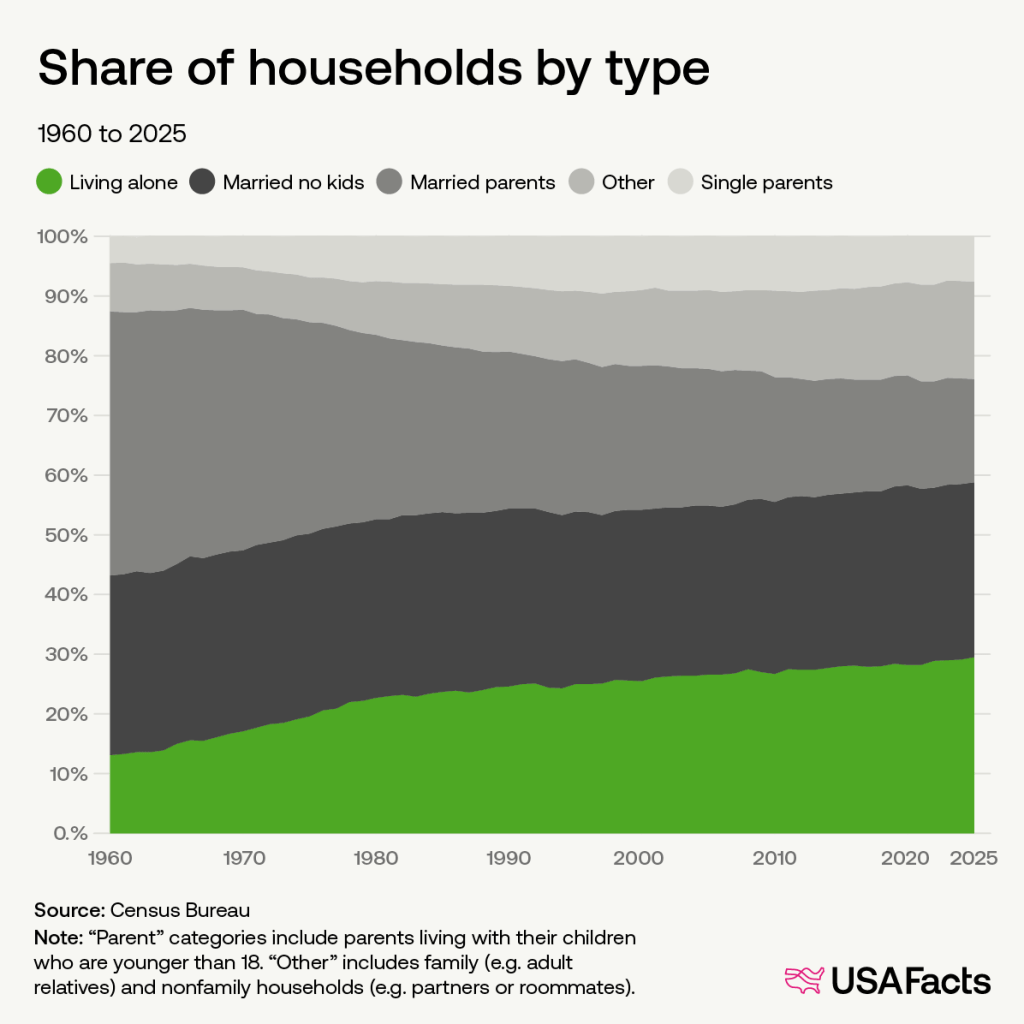
Nor is renting a bargain. According to the city’s most recent consolidated plan, prepared as a requirement for receiving federal community development block grants, the fair market rent for a two-bedroom apartment—appropriate for a family with at least one child—in 2024 was $1,149 a month. Apartments.com, meanwhile, currently shows Staunton rents as averaging $$1,151 for a one-bedroom and $1,264 for two bedrooms. (Parenthetically, it’s noteworthy that 45% of all Staunton households with children have only one parent present, according to latest U.S. Census Bureau statistics.)

To put those numbers in perspective, consider that the federal standard for housing affordability is less than 30% of household income. Spending more than that puts you in the “cost-burdened” category, while spending more than 50% pushes you into “severely burdened” territory. To reasonably afford that market-rate two-bedroom apartment, a household would have to be earning $46,000 a year. Homeownership, no surprise, is even pricier: the $330,000 median home sales price will require a six-figure annual income unless the buyer comes in with a downpayment upwards of $66,000—and even then he or she will need an annual income of roughly $80,000.

Now consider this. The median annual wage income for Staunton’s full-time, year-round workforce, according to the most recent U.S. Census report, is $55,023. See the problem?

Unless a household has two wage earners, local homeownership is out of reasonable reach for most. So are rentals for the 1,651 full-time workers in Staunton that the U.S. Census says make less than $35,000 a year. A look at the city’s job openings illustrates how new employees almost invariably will be forced into the rental market: elementary school teachers, for example, start at $53,000, police officers at less than $51,000. The starting wage for a water treatment plant operator is $20 an hour, which works out to affordable rent of just $1,000 a month. Good luck finding such a place.

Many households, of course, have more than one wage-earner, which is why Staunton’s household median income is $11,000 higher than the median for wage-earners. And, of course, there is nothing ironclad about the 30% rule. People routinely pay more than 30% of their income to put a roof over their heads—but that’s the problem. The more someone spends on housing, the less there is for all of life’s other essentials, including food, transportation, health care, clothing and childcare. Small wonder, then, that the 2025 Community Needs Health Assessment prepared by Augusta Health reported that 25.8% of Staunton residents don’t have enough cash on hand to cover a $400 emergency expense.

One of the problems with such statistics is that they paint with a broad brush, glossing over the glaring disparities among various subgroups. This is especially true in any discussion of housing affordability, as illustrated by the graph above. Relatively few people making more than $75,000 a year will have trouble finding affordable housing, not only because they make more money but also because the housing market will have more choices for them. Conversely, those who make less than $30,000 are overwhelmingly cost-burdened, not only because they can’t afford much of a home but because they’ll be lucky to find anything in their price range. As a result, two-thirds of them get pushed into the “severely burdened” category, putting them one misstep away from being homeless.*

(While these bar charts are for the U.S. as a whole, they track the local situation pretty closely. For example, a statistically dated Central Shenandoah Planning District housing study released last year reported that more than 42% of Staunton and Waynesboro renters were cost-burdened, or roughly the percentage for 2019 shown above for “all renter households.”)

All of which raises the question: who’s going to be buying or renting all those new homes that are popping up in our two cities? And the obvious answer is: for the most part, not people who are already here. They can’t afford it.

Some of the new housing in Waynesboro undoubtedly will be snapped up by employees of Northrup-Grumman, which has a new plant that is filling more than 300 new jobs paying an average of $94,000 a year—but an estimated 80% of those jobs require four-year college degrees or more, suggesting many if not most will be filled by employees from elsewhere. But Waynesboro also has become increasingly attractive to a better-paid Charlottesville workforce searching for housing that’s more affordable on this side of Afton Mountain—and once you’ve crossed the Blue Ridge, Staunton is just an additional 20 minutes down the road. So presumably the developers behind all the new construction have looked at all that and concluded there’s a market demand they can meet.

The unmet market—the housing market for median wage earners already here—is another story. As the above analysis should illustrate, there are two sides of the affordable housing equation that can be addressed to make things equal: pay people more money, or build cheaper housing. Neither is about to magically happen, but there is a workaround: subsidize housing builders so they can sell or rent at below-market prices.

Unfortunately, that strikes some people as being, um . . . too much like socialism?

*The statement about homelessness is not hyperbolic. The usefulness of this year’s Point in Time (PIT) count of homeless people in the SAW region was limited because it coincided with the extreme ice storm that paralyzed the region, preventing census takers from seeking out those who were unsheltered. But even surveying just those who were in shelters underscored some troubling trends: 39% of the 157 respondents were homeless for the first time, and 29% were 55 or older. Unemployment and eviction were the two most common reasons they provided to explain their homelessness.


Next up: The housing squeeze, part two. Waynesboro leads the way toward a socialist utopia. Can trouble be far behind?

Rethinking Staunton Crossing

(Reading time: 4 minutes)

Much of tomorrow’s (April 9) Staunton city council meeting, which starts at 7 p.m., will be focused on next year’s budget and proposed increases in utility fees, neither of which is insignificant. But an even weightier matter, because of its long-term repercussions, will be taken up by council members at their work session preceding the regular meeting, when they will be presented with a long overdue “business plan update” for Staunton Crossing. What’s unclear is whether the “update” will include a reexamination of what should be built on this rather expensive chunk of real estate.

For the uninitiated, Staunton Crossing is a 300-acre site at the intersection of I-81 and U.S. 250 that is readily identified by its million-gallon water storage tank, perched on a concrete pillar abutting the interstate. The city purchased this acreage back in 2009 and spent nearly a decade figuring out what to do with it. A comprehensive design was finally prepared by the end of 2018, and millions of dollars have been spent before and since to pave the way for . . . well, that’s the question. Because while this project inched along, the rest of the world was hurtling into a once unimaginable future.

Case in point: one of the four core businesses envisioned for Staunton Crossing was, and is, a data center of the sort that has exploded across the country generally, and in Virginia most notably—indeed, the state now leads the nation with 579 such centers. As originally designed, Staunton Crossing’s data center would total more than 800,000 square feet, far exceeding the square footage occupied by offices (375,000), retail (162,300) or advanced manufacturing (a paltry 13,000 square feet). Various alternative options were also advanced, but in all of them the data center component remained unchanged—and, apparently, unchallenged.

There are several problems with this, not so much because of bad planning but because what seemed reasonable in 2018 is at least questionable today. Less than a million square feet of data center space might have seemed ambitious eight years ago, but today it’s quite a bit on the small side. The proliferation of data centers, primarily in northern Virginia but in other parts of the state as well, not only makes the Staunton site unremarkable but puts the city at a disadvantage for an industry that tends toward clustering. Most significantly, the metastasizing and increased size of these centers has highlighted just how environmentally taxing and destructive they are, driving up electricity and water consumption—and rates—while threatening air quality with their reliance on fossil fuel generators for back-up power.

The precarious state of Staunton’s water supply has been widely chronicled, due both to the aging-out of its supply infrastructure and because of our repeated drought alerts. Local electricity rates, meanwhile, have started climbing after years of being noticeably below those of other states, with Dominion Energy’s overall prices growing 11.6% over the past year and the generation portion of its bill increasing 16.8% over the same period, largely due to rising demand from all those energy-sucking data crunchers. Over the next year, Dominion ratepayers can expect to see another rate hike of around $11 a month.

There are, in other words, so many red flags popping up around the data center explosion that state lawmakers are mulling a slew of proposed regulatory and legislative constraints, raising the possibility that they will make Virginia an increasingly unattractive option for the industry. The feeling in Staunton should be mutual, but whether tomorrow’s business plan update will go in that direction remains to be seen. One line in the power-point presentation prepared by the Timmons Group is suggestive: on the “Current Trends” slide, item 4 is “AI Site Elimination vs Site Selection.” My vote would be for the first half of that equation.

One final note, sparked by that same slide. No. 6 on the list of current trends is the perennial question, “Where will my employees live?” Ironically, the original discussion of what should go into Staunton Crossing included the possibility of workforce housing—a possibility that was inexplicably dropped, with no known record of the thinking behind the exclusion. Eight years later, that looks remarkably short-sighted.

Staunton council is in a tax squeeze

(Reading time: 8 minutes)

As Staunton wrestles with the math of trying to make revenues match expenses, its options are actually quite limited. Roughly one-fifth of its income comes from the state, while a quarter or so comes from a grab-bag of smaller taxes that can’t be pushed much higher, primarily the local sales tax, restaurant meals tax and lodging tax.  But the biggest slice of the income pie, at just under half, comes from general property taxes, and by far the dominant segment of that category is real estate taxes. It’s therefore disconcerting to realize, after even a little analysis, just how self-defeating it is to pin our city’s fortunes on such an economically stupid way of raising money.

Not that Staunton, or any other city, has much choice. Real estate taxes are the one significant revenue tool left to municipalities by a state that reserves for itself the lion’s share of other taxes, such as taxes on income. Even with that, however, a city’s taxing ability is severely circumscribed by Virginia’s embrace of the Dillon rule, which essentially prevents any kind of municipal initiative that isn’t explicitly allowed by state law. The result is a rigid set of constraints that strangle innovation.

That’s too bad, because the way real estate taxes currently function has at least two hugely deleterious effects. One, as briefly explored in my post Sunday, is as a brake on Staunton’s ability to raise sufficient revenue to fix aging municipal infrastructure before it becomes unserviceable. The second is the way real estate taxes contribute to housing blight while simultaneously raising housing prices overall, making a significant contribution to the affordable housing crisis we’re currently experiencing.

To understand why that is, take a minute to consider how property taxes work. The rationale behind them is that the bulk of city services—roads, sewers, waterlines, fire protection and, to a significant extent, police protection—go to property, not people. And as the value of property rises, so too does the value of the services it receives, so the tax should increase accordingly. That seems straightforward enough, but here’s the question that tends to be overlooked: why does a property’s value increase?

Why, for example, does property in an urban core get valued more highly than in agricultural areas? As should be readily evident, a parcel’s value is highly dependent on what’s around it. You can buy a larger house on more land in a rural part of Augusta County for the same price you’ll pay for a smaller home on much less land in Newtown, largely because of the latter’s proximity to downtown and Gypsy Hill Park. Ready accessibility to shopping, recreation and cultural pursuits is worth a lot, as is not having to foot the bill for maintaining a well and septic system. A significant portion of land value, in other words, is collectively and publicly created.

Meanwhile, the value of what’s on that land also goes up as improvements are made, be it an addition, a renovated kitchen or bathrooms, new windows and doors or a new roof. As a result, the owner of a well-maintained home pays more tax than the owner of a poorly maintained house across the street, even though the city’s cost of maintaining a paved road and the utilities between them remains unchanged. In purely economic terms, therefore, a real estate tax provides a negative inducement for improving one’s property. A slumlord who neglects his property because he views it in cash-flow terms, not as a home that is building generational wealth, nevertheless profits from the improvements made by surrounding homeowners, who by their stewardship raise the value of all the properties in the area.

But that’s not all. When housing is in short supply, as is true in Staunton and most cities today, cheaper homes will appreciate faster than more expensive homes because of increased pricing pressure caused by unmet demand. In simple terms, a million-dollar home may appreciate only a couple of percentage points from one year to the next, while a home that a few years ago may have gone on the market for $150,000 will be listed today for nearly twice that amount, as anyone following Staunton’s real estate listings can attest.  That makes real estate taxes extraordinarily regressive, with low-income people getting priced out of homes they can no longer afford because their market value has gone up even as their actual value, measured by their physical condition, has deteriorated.

For numbers nerds eager to explore this subject more deeply, the University of Chicago’s property tax project provides a granular analysis of the subject nationally, with a look at Staunton’s 2023 property tax rates and their regressivity available here. This is truly wonky territory, but the bottom line is this: Staunton three years ago ranked as the 45th least regressive of the 131 Virginia cities and counties in the project’s sample, as its home values were above average nationwide and regressivity levels were in the bottom quartile. So compared to others, Staunton has been fairer than most.  

That’s the good news. The bad news is that the data is three years old, and since then the city has seen a 14.45% increase in the median residential assessment. More to the point, pressure on the city to raise revenue is only going to increase as its infrastructure demands keep growing, but hiking real estate taxes—the one significant revenue source over which the city has any control—would fall most heavily on those who can afford it least. Is there no escape?

TO BE SURE, there are a few workarounds Virginia has made available to taxing localities, chiefly in the form of tax exemptions for low-income homeowners. But that approach, while individually helpful, must be seen as a limited patchwork that only underscores how unevenly real estate taxes are applied and doesn’t solve the bigger problem.

One theoretical, if politically unlikely, solution would be to make real estate taxes explicitly progressive, in the same way that income is taxed progressively—those who make more get taxed at a higher rate. Under that approach, homes appraised below a certain level would be taxed very little or not at all, while higher appraisals would be taxed at progressively higher rates. Instead of the current rate of 91 cents per $100 of assessed value, for example, Staunton could have a rate of 85 cents per hundred for homes assessed below the current median value of $251,240, then increase the rate by 5 cents for every additional $50,000 in assessed value, to a maximum of $1.35 per hundred dollars for homes assessed at $750,000 or more. Which, as it happens, is the tax rate in Alexandria, which is no stranger to homes in that price range.

Yet another approach, and one with some academic credentials, is to tax land but not the improvements—or as summarized by conservative economist Milton Friedman (yes, yet another University of Chicago reference point), “the least bad tax is the property tax on the unimproved value of land.” That would at least eliminate the tax disincentive for investing in one’s property, even if it would not address the underlying problem of speculators benefiting from their neighbors’ investments.  Moreover, a land value tax (LVT) instead of the common real estate tax would be a huge deal for small land developers and builders, who don’t have the political muscle to push for tax abatements or other incentives. That could make a major difference for a city like Staunton that is trying to incentivize in-fill projects.

The curious thing about our current real estate taxes is that we already assess land and any improvements on it separately—but then combine the two into one assessment to which a single tax rate is applied. Theoretically, then, it would be a simple matter to separate the two and tax land at a higher rate, determined by its development potential, while dramatically reducing the tax rate on improvements that have already been made. Theoretically. Whether that’s even possible under the state’s Dillon rule is, however, questionable.

None of the exposition above will make any difference this Thursday, when the city council will be formally presented with next year’s budget. But it should prompt our elected officials and their administration to question what the city can do long-term to ensure adequate funding of our infrastructure while also protecting our most economically precarious residents, because without that discussion we’ll just find ourselves in the same bind—but worse—a year from now, and for many years after that.  That could mean pursuing one of the ideas above. It could mean something entirely different. Whatever it is, however, the real estate tax should be a leading candidate for reform, even if that requires an assault on the Dillon rule.   

Housing worries are making us sick

(Reading time: 7 minutes)

Tax season is fully upon us, so it’s only natural for people to grumble about the Internal Revenue Service. But here’s one undeniably good thing for which the taxman can take credit: because of an IRS rule dating back more than a decade, tax-exempt hospitals are required to periodically assess the health needs of the communities they serve. That’s the good news. The bad news, for anyone reading Augusta Health’s report card from last year, is that our health in some key areas has declined steadily since 2016, and a significant reason for that decline is housing affordability issues that weren’t even on the radar a decade ago.

Indeed, the most recent Community Health Needs Assessment (CHNA) provides a sharp contrast to the first in a series dating back to 2013. That freshman effort took a notably upbeat approach by noting that Augusta was the 31st most healthy county in the 20th healthiest state in the country. “Augusta County is living up to its motto ‘Let the ages return to the first golden period,’ referring to a period of simplicity and happiness,” it rhapsodized, in less than scientifically detached fashion. “In general, the Augusta County, Staunton, Waynesboro area outperforms the state averages for health status. Where local results fall at or below those levels, we see an opportunity for combined actions that result in improved community ratings.”

But then, in a prescient turn of phrase, it added: “There are several lifestyle gaps that need to be closed to move Augusta County toward greater overall health.”

Fast forward a dozen years, and last year’s CHNA indicates that those gaps not only were not closed, but that some grew into chasms.  While the 2012-13 assessment ranked chronic disease management, as well as health behaviors (“particularly related to obesity and physical activity”) as its top two health priorities, the 2025 ranking vaults mental health to the top spot. And although physical activity and weight retain their number two ranking, right on their heels as number three is housing, which scarcely registered in the earlier assessment.*  Meanwhile, chronic diseases, led by diabetes, trail behind in importance.

To be sure, the 2013 assessment was significantly more superficial than the reports that started coming out in 2016, when the grunt work was handed over to Professional Research Consultants and a 28-page report metastasized into a document nearly nine times as long. Moreover, the greater detail was complemented by a consistency of format, enabling comparisons across the three-year intervals that followed. The problem is that this consistency also highlights just how much backsliding has occurred.   

AMONG THE ASSESSMENT’S housing-related findings for Staunton (anyone wanting to focus more on Waynesboro or Augusta County can peruse the complete assessment here), nearly a third (32.1%) of residents worried or stressed over their rent or mortgage payments in the previous year—apparently with good reason, as 12.3% reported they had been displaced from their housing within the past two years, and 9.9% said they’d been homeless in that same time period. Another 11.2 % said they were living in unhealthy or unsafe conditions.

For the SAW region as a whole, the incidence of unhealthy or unsafe living conditions jumped significantly from 2019 to 2025, from 9.9% to 14%—but even more sharply for renters, to 19.5%, compared to 10.5% of homeowners. An even wider disparity between renters and homeowners was found in response to the question of housing instability, with 17.8% of renters in the SAW region saying they had to find emergency housing in the previous two years, compared to 4.8% of homeowners. Meanwhile, the overall incidence of housing instability in the SAW region doubled, from 5% in 2016 to 10.2% in 2025.

Homelessness in the SAW region—defined as adults reporting “a time in the past two years when they lived on the street, in a car, or in a temporary shelter”—was zero in 2016, then climbed steadily through each reporting period, to 6.8% in 2025.

The health consequences of being homeless or of living in unsafe housing can be intuited by most people, but less immediately obvious is the toll on mental health taken by persistent anxiety over losing the home one already has. And while there are numerous reasons for depression or suicidal ideation, the parallel growth of deteriorating mental health and of insufficient affordable housing strongly suggests a link. Indeed, as housing stress has grown significantly over the past decade, the area’s mental health has taken a dive:

  • Asked to rate their overall mental health, 21.9% of SAW adults believe it is only “fair” or “poor,” a 150% increase since 2016. Staunton leads the way on that metric, with 27.8% reporting fair or poor mental health.
  • A total of 41.7% of SAW adults (and 50.4% of Stauntonians) say they have had two or more years in their lives when they felt depressed or sad most days. The open-ended nature of that measurement would dilute its significance, were it not for the fact that it is nearly double the 21.8% reading in 2016.
  • More than a third (35.5%) of SAW adults say they have been professionally diagnosed as having a depressive disorder, a 138% increase from the 14.9% reported in 2016. Moreover, that incidence jumps to a whopping 47.1% of Staunton’s adults, which is more than twice the 20.4% incidence for Virginia overall.
  • Local residents aren’t just depressed; 17.2% of SAW adults say they feel that most days are “very” or “extremely” stressful—a percentage also up significantly from the 10.5% recorded in 2016. Staunton leads the pack on this metric as well, with 22.1% reporting they feel stressed out.

Such ailments, alas, afflict some demographic groups far more severely than others, with low income and LGBTQ+ respondents greatly over-represented in all negative ratings—demographic groups that also have less visibility within the larger community, and less political clout with which to address the issues that are making them sick. Nor, once they do get sick, are there adequate mental health and related services to provide the care that’s needed.

The CHNA includes literally scores of comments from local doctors, social services providers, community leaders and others, detailing what they believe are the reasons for this intractable morass. To be blunt, there isn’t much that’s revelatory, although some of the anecdotes—a 35-year-old father, working two jobs to house his family in a motel room, dying from a stress-induced heart attack—get at the human cost of the illness permeating our body politic.  And then there’s the occasional assessment item that further drives the point home, such as the finding that 19.3% of local adults acknowledge they have been “hit, slapped, pushed, kicked or otherwise hurt by an intimate partner.” That rate, too, has doubled since the 9.7% reported in 2016.

The problem with health exams, as all too many physicians know, is that patients will yes them to death—exercise, stop smoking, eat more nutritionally, cut down on the booze, yadda-yadda—and then go blithely on as though no red flags had been raised. So it seems with the 2025 CHNA’s section marked “evaluation of past activities.” Number two on its list of previous strategies was meeting the health care needs of the homeless through a four-pronged approach, all of which were implemented in 2023—and all but one, and then only minimally, going unaddressed in 2024, due to a vacant RN Health Educator position.

Vacant since November 2023, that is, or almost two years prior to the 2025 CHNA’s release.

It’s a near certainty that Augusta Health’s unfilled position is a result of budget constraints, but as with all such cuts, choices reflect priorities. Short-term rewards have a way of biting us in the ass down the road, and a high-salt, high-cholesterol diet almost invariably morphs into diabetes and obesity. But what are you going to do when it’s your doc who’s ignoring sound medical advice?

Meanwhile, it’s clear we have to move beyond discussing the lack of sufficient affordable housing simply in economic terms, or of viewing housing issues through a policy-making lens that bogs down in abstract philosophical differences. The lack of sufficient housing for city residents earning what passes for a living wage locally is a serious health issue every bit as insidious as lead poisoning, seeping into the populace largely unseen and unremarked until it explodes in seemingly inexplicable violence, depression and apathy. The 2025 CHNA waved several red flags. How many more such studies will we need to awaken us to the epidemic that’s underway?


* “Scarcely registered,” indeed. The single mention of housing in the 2013 CHNA was in a graph showing the SAW region’s top three health and community issues, in which “affordable housing” came in at no.21 of 22 issues overall.

On some tests a failing grade is better

(Reading time: 3 minutes)

Sometimes you can stumble across the most alarming news in the most unexpected places.

Case in point: Staunton today put out its February activity report, which includes a regular update on how many articles and stories have mentioned Staunton in the past month, as well as how many eyeballs may have seen them. Fourth on the list this time, with a “reach” of more than 40 million, was a piece on Realtor.com headlined, “Best Mountain Towns Where Homes Deliver the Strongest Airbnb Returns.”

Care to guess which “mountain town” came in tenth on the list? That would be Staunton, of course, where homes have a median listing price of either $370,000 or $418,000 (Realtor.com couldn’t settle on a single figure) and an “average annual revenue potential” of $43,000. “We are seeing investors with proven track records buy strategically in Staunton, where they know they can implement their knowledge of the market with robust design and differentiated amenities,” Realtor.com quotes Sydney Robertson, identified as a real estate agent with Loring Woodriff Real Estate Associates—which, as it happens, is based not in Staunton but in Charlottesville.

Robertson may be good at tossing word salads (“robust design and differentiated amenities”?), but it should be noted—especially since it was ignored by Realtor.com—that she also is chief sales officer for Carriage House STR. Carriage House, as of a couple of years ago, was operating scores of Airbnbs across central Virginia, including more than two-dozen in Staunton proper, to which it gave a thumbs-up for the city’s lack of short-term rental restrictions. So, not exactly a disinterested observer.

The list of mountain towns so conducive to making money for “investors” was created by AirDNA, a firm that compiles and analyzes Vrbo and Airbnb data. What makes cities like Staunton so attractive to people who think in terms of balance sheets, according to AirDNA chief economist Jamie Lane, is that all the really hot mountain destinations have gotten too expensive. That makes second-tier cities like ours look like bargains. “The markets on this list tend to benefit from steady, multiseason demand and more affordable home prices than those in top mountain destinations,” Lane elaborated. “That combination can create a more balanced investment profile, with strong revenue potential relative to acquisition costs.”

Just how much of a bargain Staunton represents is encapsulated by AirDNA’s ranking system, which looks at five variables to generate a score between 40 and 100. A score of 90-100 is an A. Waynesboro merited only a 70, Lexington and Winchester notched a slightly higher 74, but Staunton roared to the head of the class with a list-making 93. Which all sounds terrific for Staunton, until you realize that what’s being assessed is Staunton’s attractiveness for people who view housing as financial assets, not as homes.

The five variables feeding into this grade include investability, rental demand, revenue growth, seasonality and regulation—or, more accurately, the lack of regulation. Or to put it in English, Staunton offers high curb appeal year-round, with under-priced real estate compared to what the short-term rental market will pay. That may come as a surprise to Staunton residents who can’t find a house they can afford to buy, but that’s what happens when our housing supply is being picked over by people who don’t have to live here.

All the handwringing about Staunton’s lack of sufficient affordable housing is pointless as long as there’s essentially no city regulation of short-term rentals. Without it, the transformation of homes into business assets will continue, largely unseen and unchecked, and articles like this one reaching as many as 40 million people will only accelerate the process. That may be something for the new Staunton Housing Commission to ponder as it plots its future course.

Thinking of giving? Think carefully

(Reading time: 9 minutes)

At a time when an increasingly frayed “safety net” is in danger of collapsing altogether, starved of funds and overseen by a vastly hollowed out federal bureaucracy, it’s only to be expected that social service agencies will step up their fund-raising efforts. At our household, for example, we get a plea for donations to the Blue Ridge Area Food Bank at least once a month, to which we respond as we’re able. But the line of those in need cuts across all of life’s essentials, and seems to get only longer, and you have to wonder how it will all end.

One thing about which we should not have to wonder, but which is rarely addressed publicly, is the level of institutional need. Yes, people are hungry, and in need of shelter, and wanting for adequate medical care or school supplies or decent clothing. But are the agencies working to help such people equally needy? How well do they apply the funds they raise, and how accountable and transparent are they with their donors? Do some have more than they need to help their constituents? Or have some squandered the donations they’ve received, as was so blatantly true of the now defunct local United Way a couple of years ago? How many local affiliates of national organizations coast on the latter’s reputations, rather than on their actual accomplishments?

These are tough questions to pose, because they threaten to tarnish institutions seen as local champions of the downtrodden. But the reality is that the pot of community goodwill and financial support is finite, and likely to shrink even as the need keeps growing. Giving money to Agency A means there’s less money to give to Agency B. Yet the few local institutionalized sources of such help—such as Community Development Block Grants, the Community Action Partnership of Staunton, Augusta and Waynesboro (CAPSAW) or the Community Foundation of the Central Blue Ridge—pay scant attention to the financial statements of their grant applicants, showing more concern for how many people their contribution might benefit.  Private contributors, meanwhile, are even less likely to do their homework when responding to the latest tug at their heart strings.

SAW Habitat for Humanity

One prominent example of muddled financial accountability is provided by the SAW Habitat for Humanity, which a couple of years ago was roiled by scandal involving its then-executive director, Lance Barton. Initial accusations of sexual assault by Barton were followed by reporting in the Augusta Free Press of years of Barton’s alleged verbal abuse of staff, temper outbursts, uncomfortable conversations about sex, substance abuse, drunken behavior at work and supposed financial irregularities. By late spring of 2024, Barton was out of a job, Habitat’s board of directors had virtually a complete makeover, and an interim director was brought on to manage the transition until a permanent replacement could be recruited.

That replacement was Brad Bryant, a widely respected local builder, teacher and former Habitat board member who was hired almost ten months ago. To be fair, Bryant inherited a mess—but it’s also fair to question his lack of public progress thus far in setting Habitat’s financial house in order. Although Bryant says the organization recently completed its first financial audit on his watch, its findings have not yet been publicized. Meanwhile, the most recent Form 990 tax return posted on Habitat’s website—the IRS form all non-profit organizations are required to submit to maintain their non-profit status, a form that potential contributors can consult before giving their money—is for the fiscal year that ended June 30, 2022. That was almost four years ago.

More recent Form 990s have been filed with the IRS, but Bryant had not seen them before this week. One was for the fiscal year that ended June 30, 2023. A second, following an apparent decision by the interim executive director to change Habitat’s fiscal year to a calendar year, was filed for the year ending Dec. 31, 2023. Depending on how diligently someone in the public searches for financial accountability, then, there’s been a lack of reporting for more than two years, and possibly quite a bit longer.

Some of that gap may get filled when the recent audit results are published, but even then, the report will be notably deficient in at least one material aspect. Among the financial assets in Habitat’s possession are nearly 300 pieces of poster art that were purchased by the disgraced Barton on a junket to Poland, ostensibly as an investment that could be sold to American collectors at a hefty mark-up. The art was purchased with Habitat funds, on a trip underwritten by Habitat that was rationalized as an unconventional but potentially lucrative fund-raiser. The art now sits in a locked room. It has never been shown to the public, and it has yet to be professionally appraised. Whether it’s a significant if unrealized financial asset, or whether it’s just a lot of worthless paper, the product of Barton’s feverish imagination, remains unknown.

In Bryant’s assessment, any fuss over the Polish art is a tempest in a teapot, much ado about nothing at a time when he’s struggling with more substantive issues to make Habitat “viable again.”  He may be right. He may also be markedly wrong. The point is that a somewhat bizarre aspect of Habitat’s bookkeeping is a black box that the organization doesn’t want anyone looking into. When I asked Habitat’s new chairman of the board, Charles Edmond, for an explanation of the Polish art fiasco, his terse response was to say that “due to ongoing litigation, our attorney has advised us to not talk about this issue at this time.”  Yet as Bryant conceded, there actually isn’t any litigation, just repeated failed attempts at getting the Commonwealth’s Attorney to look at the possibility.

There’s no question that Habitat was left in tatters by its departed executive director, and that restoring its luster—not to mention its effectiveness at actually building affordable housing—is a monumental task. But that task is not made easier in the face of financial inscrutability. Not when organizational viability is dependent on the public’s willingness to open its wallet.

Valley Mission

A diametrically opposite set of circumstances is provided by Valley Mission, which provides long-term shelter and case management for our area’s homeless population. It is perpetually over-subscribed, with a waiting list that can stretch for months, and even though the Mission ostensibly has a six-month window within which its clients are encouraged and worked with to obtain permanent housing, the reality is that a year or more of residency is not unusual. There just isn’t enough affordable housing to meet the need.

It may seem paradoxical, therefore, that the Covid pandemic was very good to the Mission’s financial fortunes. Money poured in from various sources, so even as expenses climbed, revenue far outstripped what was needed, jumping from a more or less normal $1.3 million in 2019 to $2.5 million in 2020 to $3 million in 2021. And although income declined somewhat thereafter, it remained significantly higher than pre-pandemic revenue.

Give the Mission a thumbs-up for showing restraint in the face of this bounty: although expenses have continued to climb every year, they have not outstripped the Mission’s two main sources of regular income, contributions and grants, and the income generated by its thrift stores in Staunton and Waynesboro. The surplus has instead been banked, some in cash and some in investments, where it has been generating an enviable amount of interest income: $103,909 in 2023, for example, and an additional $121,642 in 2024.

All told, then, the Mission ended 2024 (its 2025 financials have not been filed yet) with just a tad less than $3 million in cash, $1.6 million in investments, and a total of $5.4 million in unrestricted assets. To put that in context, the Mission’s total expenses in 2024 were $2.3 million—which is to say, the organization is now sitting on enough liquid assets to operate for two years without a single additional dollar coming in the door. It is, in one sense, functioning like an investment bank, which may not be what potential donors want their contributions to fund.

A possibly bigger problem is that even as it hoards a lot of cash, the Mission continues seeking and receiving funding from the same sources used by other local social service agencies, many of which are also trying to help people meet their housing needs. That includes Waynesboro Area Relief Ministries (WARM), Valley Supportive Housing, New Directions Center, and Renewing Homes of Greater Augusta, all of which operate on a shoestring. Meanwhile, in recent years the Mission has been receiving approximately $7,940 annually from Staunton’s Community Development Block Grant, was awarded $11,500 from the Community Foundation in 2024 and $161,000 in 2023, and in the year ending June 30, 2025, received $36,622 from CAPSAW. That’s all money that would have had a far more meaningful impact elsewhere.

There’s another aspect of the Mission’s growing wealth that is problematic. Not only is the Mission not meeting the full demand for the services it already provides, but there are numerous adjacent needs of the homeless population that remain completely unaddressed.  Among the most prominent, for example, is the lack of a day center in the SAW region to provide shelter and services to people who otherwise are left wandering the streets in search of winter warmth, summer shade and refuge from rain and other extreme weather in all seasons.  There are several reasons why this state of affairs exists, but among the most prominent is a lack of adequate funding.

Providing a day center is not the Mission’s responsibility. On the other hand, it’s not unreasonable to think that perhaps the Mission could expand its efforts to answer an unmet need that is entirely aligned with its core mission.  Perhaps it will.

The Mission’s executive director, Susan Richardson, left open that possibility by asserting that the Mission’s board and leadership “makes financial and strategic decisions based on what we believe is best for Valley Mission and the residents we serve.” So . . . not saying no either to expanding the Mission’s facilities to provide more shelter space, or to filling in other holes in the safety net provided to the same generalized population. But also not saying no to bellying up to the financial water hole frequented by all those other critters in the social services ecosystem, which after all is how the system works.

It’s a jungle out there.

A glimmer of hope for housing

(Reading time: 5 minutes)

The new Staunton Housing Commission, the city’s attempt to address issues of homelessness and an inadequate supply of affordable housing, got off to a rocky start with its first meeting last week. Two of its nine members were not present, and the meeting itself—one of only four scheduled for this year—occurred two months later than initially scheduled. Moreover, much of the meeting was marked by red flags waved by city planner Rebecca Joyce, who asked commission members to trust her efforts over the next year to steer their work.  

“We have to stay in a certain lane,” Joyce cautioned, warning against scattershot thinking on the one hand and thinking there is a magic formula to fix everything on the other. “Guard rails” were mentioned repeatedly.

For all that, the 30 minutes or so of group discussion that took place during the 75-minute session were the liveliest on the subject since the commission’s progenitor, the Staunton Housing Strategy Group, started meeting 18 months ago. This was, in part, due to the addition of new voices and perspectives that were notably absent from the strategy group, including those of Robin Miller, a developer, and Hans B. Kettering, a young man searching for housing he can afford while working for Fisher Auto Parts. So perhaps there’s hope for some innovative thinking.

One hint of a possible clash of ideas and values came, interestingly enough, from city vice mayor Brad Arrowood, who was an early proponent of creating such a commission. Noting that Staunton has more cows than most cities its size because of its more than 2,000 acres (of less than 13,000 total) zoned for agricultural use, Arrowood suggested that this flat and gently rolling land could eventually be developed for housing.  That contrasted with an observation made later in the meeting by Miller, the developer, who noted that building out a road map—that is, building roads, curbs, sidewalks and utilities, including electric, water and sewer lines, plus storm drains—currently costs between $1,700 and $2,000 a linear foot.

Imagine what that means for an entire traditional subdivision. With the exception of Bell’s Lane, a narrow asphalt road, Staunton’s ag-forestal district has none of that infrastructure, so building housing there will be enormously expensive. So expensive, in fact, that there’s only two ways it can happen: either by building very large, very expensive homes, or by building lots and lots of homes within a much smaller footprint. Easier, cheaper and faster, Miller offered, would be to fill in what’s already here, building on vacant lots in the developed parts of Staunton. Indeed, he added, one of the quickest ways Staunton could generate more affordable housing would be to allow greater density overall, and to allow accessory dwelling units (ADUs) in particular.

ADUs have become exactly the kind of quick-fix housing solution that makes Joyce fret, universally offered as a sure-fire way to get more people housed by allowing property owners to build second or even third homes on their existing lots. They invariably come up in these discussions because they’ve become so widespread—elsewhere. Miller mentioned that Richmond just recently adopted an ADU ordinance, despite heavy opposition. A map I published back in November showed the stark contrast locally, with Staunton and Waynesboro as non-ADU islands surrounded by the ADU-receptive sea of Augusta County.

Although the Staunton Housing Strategy Group ostensibly embraced the ADU approach, the formal housing strategy it presented to city council last fall slow-walks the concept—and one possible reason was advanced by Arrowood, who told last week’s commission meeting that it’s fraught with possible unintended consequences. What if, he suggested, homeowners on large lots put up several ADUs, only to position them as short-term rentals, or Airbnbs?  Staunton would be helpless to prevent a transformation of quiet residential neighborhoods into beehives of transient activity, while scarcely increasing the amount of affordable housing for teachers, fire fighters and other essential workers.

The obvious response is not to obstruct ADUs but to regulate Airbnbs, as other Virginia localities already do. Albemarle County, for example, requires short-term rentals to be on a minimum of five acres with a rural zoning.  But a regulatory approach runs into another philosophical roadblock, which Arrowood also articulated and which goes a long way toward explaining why Staunton is in the spot it’s in: houses are private property. They’re not just homes, but financial assets.  Airbnbs are property owners’ entrepreneurial effort to better themselves, comparable to the boarding houses of yore, when widows would let out their spare rooms to working class stiffs who couldn’t afford their own homes. Any attempt to regulate such enterprise would be downright un-American.

Airbnbs, which are rented by the day, week or month to transient guests, are nothing like boarding houses, but the comparison appeals to a certain rosy nostalgia. It also highlights the tension, albeit not one that was further explored at last week’s commission meeting, between two opposing views of how we move from here. On the one hand, an assertive embrace of a higher density and infill strategy that builds on what already exists; on the other, a long-range contemplation of how a blank canvas, otherwise known as the ag-forestal district, might be shaped while avoiding upsetting the status quo.

As with many such tensions, the outcome most probably will lie somewhere between the two. But it will be interesting, in the months ahead, to see how clearly these differences are articulated by commission members and how they’re resolved. That could make for more of the animated conversation that showed briefly last week, before Joyce threw up those guard rails, and just might lead to a more durable and meaningful consensus.

* * *

March 11 postscript/clarification: I’ve misstated Hans Kettering’s interest in local housing issues, as he wrote to let me know that he has decent housing and an amicable relationship with his landlord. As Hans further noted, “I was speaking for friends and people of the community that can’t find anything in Staunton at a reasonable price.” My apologies for my mistake.

Public housing faces multiple attacks

(Reading time: 5 minutes)

As far as the U.S. Department of Housing and Urban Development (HUD) is concerned, March came in like a lion.

Starting in late February and continuing into this week, the federal agency responsible for most public housing fired off a volley of proposals guaranteed to make its tenants miserable. The timing, as the economy teeters on the edge of a downturn, affordable housing remains more mythical than real and the war on immigrants continues unabated, couldn’t be more heartless.

The first assault came Feb. 20, when HUD published a proposal to prohibit immigrants who are ineligible for housing assistance from living with family members who are eligible, as is the current policy. The ineligibility list includes immigrants who are otherwise in the U.S. legally, such as immigrants with student visas or those with Temporary Protected Status. Such mixed-status families currently receive prorated housing assistance that covers only the eligible members, which means the family as a whole pays proportionally higher rent than fully eligible families. If adopted, the proposal would force mixed-status families to separate or to leave their homes altogether.

A second shoe dropped just a week later, when HUD took steps to repeal a requirement that public housing agencies and private homeowners accepting vouchers provide their tenants with a 30-day notice before filing for eviction for non-payment of rent. The Feb. 26 announcement was designated an “Interim Final Rule,” which in a ready-fire-aim twist, means that despite a comment period that runs through April, the repeal will go into effect March 30. Although HUD’s notice acknowledges that the 30-day eviction notice “provided tenants with longer runways to undertake remedial actions to become current with their rent,” the agency contends that too many tenants simply took advantage of the additional time to go deeper into arrears.

Besides, HUD added, dropping the 30-day window will improve housing access by “opening up housing opportunities” for people on waitlists for affordable housing. Which fits right in with the Orwellian phrase, “War Is Peace. Freedom Is Slavery. Ignorance Is Strength.”

Consider the graph at the top of this page, which shows that a third of all evicted renters have incomes of less than $30,000 a year. Even at the top of that range, monthly rent of more than $750 pushes a tenant into the “rent burdened” category, which leaves little wiggle room for other necessary living expenses or emergencies. Falling behind on rent by even a month creates a nearly insurmountable financial hurdle for catching up.

But that’s not all. While an estimated 80,000 people would lose their housing assistance because of the mixed-status family rule change, and more than 2 million HUD-assisted households will be impacted by the loss of the 30-day eviction notice, an estimated 3.3 million would lose their rental assistance as a result of a March 2 proposal to impose work requirements and time limits on housing assistance. The estimate, based on an analysis by the Center on Budget and Policy Priorities, includes 1.7 million children who could lose their homes.

The proposed work requirement, long embraced by political conservatives who fret about welfare queens, would require “work eligible” adults to put in up to 40 hours a week at programs and projects that “address local needs and goals.” Failure to comply with work requirements would be grounds to terminate housing assistance. But potentially even more onerous is the proposal to allow PHAs and housing owners to establish two-year limits on housing assistance for non-elderly, non-disabled families.

All of these proposals are more nuanced than these brief summaries reflect, but the bottom line is that there are more than 10 million people in the United States who have a roof over their heads primarily because of federal rental assistance programs. Most people in HUD-assisted housing who can work do work: in Virginia, 81% of non-disabled people without young children worked in the past year, according to the National Low Income Housing Coalition. With the minimum wage in the state set at $12.41 an hour, and Virginia’s fair market rent for a two-bedroom home coming in at $1,749, it should be obvious why subsidized housing is the only way many state residents can have a roof over their heads. Now that’s at increased risk.

Nehemias Velez, executive director of the Staunton Redevelopment and Housing Authority, says he knows of no local families that will be threatened by the proposed mixed-status family proposal. The local effects of the other two proposals, however—not to mention other shots HUD might take in the weeks ahead at the people it ostensibly serves—remain to be seen. But it’s already quite clear that the fragile existence of people depending on federal tax dollars to survive is becoming ever more precarious. And as more of them inevitably get pushed out of their homes, it’s going to be up to municipalities like Staunton to pick up the pieces.

That’s not good. We’re not meeting current demand as it is, with long waiting lists at the housing authority, the Valley Mission and Valley Supportive Housing, so where will the new waves of suddenly homeless people go? How many more emergencies like the one we had in late January will it take before we get serious about developing an adequate supply of affordable housing, as well as providing sufficient transitional emergency shelter spaces to tide people over in the short term? Where is the political leadership we need to start beating the drum on these issues?