‘Unknown causes?’ Give me a break!

(Reading time: 4 minutes)

It took me a while to check out the explanation given to Staunton City Council about the August 14 water-main break (viewable here), but it’s still worth watching, if only to see a notable example of a kicking-the-can-down-the-road approach to municipal governance.

The presentation August 28 by public works director Dave Irvin included a detailed timeline, lots of numbers and appropriate praise for his department’s “all hands on deck” rapid response and hard work. The 16-inch cast-iron pipe that ruptured was at least 80 years old, shattering with such force that it blew itself apart and “self-excavated,” with water rushing out of the trench it created at a rate of 16 million gallons a day—four times its normal flow. Thanks to the department’s quick action, with valve closures starting within an hour of the estimated break, perhaps a million gallons were discharged into the surrounding neighborhood.

But what caused the break? “We don’t know,” Irvin said, contending that “the possible causes are many.”  The extensive damage, he added, made a postmortem impossible. A council member chimed in with a helpful metaphor: drive a car long enough, and sooner or later you can expect a flat tire—you just won’t know when, or which tire will go, until it happens.

It all was, the consensus appeared to be, an act of God. Something you just have to roll with.

But here’s the thing: the August 14 incident was Staunton’s second flat tire over the past couple of decades. A 2007 break in Cherry Hill also ruptured a 16-inch main, also one of cast iron, and also described as the result of “unknown causes.” That break took more than 12 hours to shut off and resulted in a slew of state-issued regulatory changes, directly contributing to the quick resolution this time around. That’s the good outcome. The bad outcome is that we’re still accepting the excuse that such breaks are because of “unknown causes.”

We know the cause. Cast-iron pipes, which were standard issue when much of Staunton’s water works were built, are brittle. The industry standard is a 100-year life span. Nearly half of the city’s water is supplied by the North River Reservoir, which is tapped by a 20-inch cast-iron pipe threaded through a 6-foot tunnel burrowed through Lookout Mountain, then connected to a 14-mile cast-iron pipeline that runs to the city. Next year will mark the centennial of that project—100 years since a system with a 100-year life span was completed.  Miles more of cast-iron pipes of varying vintage and various diameters, including 16- 14- and 12-inch, run throughout the city.

Moreover, the karst topography that underlies our region is not kind to brittle systems. The 6-foot tunnel that once buffered the 20-inch main is no more, gradually settling around the pipe over the past 10 decades. That much was publicly known at least a decade ago, when Nancy Sorrells wrote about it in an apparent response to proposed fracking in the George Washington National Forest that alarmed city officials because of its threat to a crucial water supply. The fracking threat retreated, but the land continues to shift and settle nonetheless, putting more stress on a water distribution system that is hurtling toward its past-due date.

The flat-tire metaphor may be reassuring when all four tires are brand-new. In this case, that’s hardly the case. These tires have been hitting the road for many, many decades, and we’ve now had two flats. Every bit of Lincoln’s head—and then some—rides above a non-existent tread on the other two.

Why do people drive on bald tires? Usually because they can’t afford new ones, which may be why Staunton’s city council has been unwilling to take a closer look at an increasingly untenable situation. Although a city council member asked Irvin how much cast-iron pipe is out there, he didn’t get an answer—quite possibly because an exact number is unknown. But what is known is that replacing cast-iron mains with more flexible ductile-iron pipe is expensive. Hugely expensive. The Richmond Avenue project, for example, will replace less than two miles of a 6-inch cast-iron main and a 10-inch cast-iron main—because of their frequent breaks—with a single 16-inch ductile-iron main; that project is budgeted at $13 million. The city overall has more than 150 miles of pipeline.

Faced with such an imponderable financial overhang, council members have been only too willing to avoid asking the hard questions. And Irvin made it easier for them, announcing at the outset, “It would be great if we could predict breaks like this. We can’t.” Narrowly speaking, he’s correct.

But what we can predict, as we drive down the road on our well-worn slicks, is that more breaks are coming. They’ll come more frequently and sooner than we expect. And we really won’t be able to continue insisting that their causes are unknown.

(Re)turning the tables

(Reading time: 4 minutes)

I don’t pretend to be a business genius, having come to running one only late in life, after decades of working for others. But I’ve always been interested in how a business works, and I’ve seen enough to know when a business decision is short-sighted, self-defeating or just plain ignorant.

Take Bed, Bath & Beyond, one of those themed big-box stores that once aspired to dominate a market segment but which went into bankruptcy a couple of years ago, shuttering its stores in Waynesboro and Harrisonburg and all across the country. Its assets were subsequently purchased by Overstock.com, but as with so many things, the company lived on as a digital ghost, marketing its wares on the internet.

That’s how we came to order a new kitchen table, paying less attention to the source than to the fact that it had the right combination of size, color and price. And boy, was the response prompt! Two days after I’d placed the order, and much to my wife’s delight, two men in a FedEx truck lugged a large, 78-pound box box into our hallway. After assuring myself the carton was intact, I was ready for the relatively simple task of attaching the legs to the tabletop.

But no. When I sliced open the tape and peeled back the box cover, I saw that one of the long frame pieces had broken in half and part of it was separating from the top itself. The break wasn’t catastrophic; had it been a bone, it would have been a simple rather than a compound fracture. A repair would have been as simple as tapping the separated half back into place, perhaps with a spot of carpenter’s glue where it met the table top, then screwing in a reinforcing one-by-three on the inside of the break, where it couldn’t be seen from the outside. That would have been a serviceable fix, leaving only a relatively minor cosmetic blemish where the two halves came together—but did I want to do that? Doing so might be less work than reboxing the whole thing and going through the hassle of contacting BB&B to replace the table, but still, did I want to pay full price for damaged goods?

I did not. And so, girding myself for a long telephone joust and arming myself with pictures of the damage, I called Bed, Bath & Beyond and eventually spoke to a very polite, very efficient and heavily-accented woman. I’ll spare you the details. Suffice to say that my bottom line was that I was willing to keep the table as is, in return for a substantial discount—say, 40% to 50% off my original purchase price of $330. My counterpart, even after a full explanation of the situation and a review of the photographs I sent her, was unable to reward me with any more than a $73 store credit. Not a refund, mind you, but a credit, which presumed I would be rushing back to buy more of BB&B’s wares. Somehow, I wasn’t tempted.

I wound up sending back the damaged goods, for which BB&B had to pay the shipping. BB&B sent me a replacement table, for which it also had to pay the shipping. And then, of course, BB&B now has a broken table in its inventory that it has to figure out how to dispose of. Given that, I think a $132 refund would have been a bargain. And given the company’s inability to recognize that simple math, I think that perhaps this post-bankruptcy revival is not going to end well, either.

P.S. I subsequently learned that Overstock.com has been rebranded as Beyond Inc., which is owned by Marcus Lemonis, star of stage and screen—well, screen, as in appearances on “The Profit” and “The Celebrity Apprentice.” That puts him in the company of people like Donald J. Trump, another businessman who talks bigly but delivers far less.

Lemonis reportedly plans to continue BB&B’s resurrection by opening new storefronts around the country—but not in California, which he faults for having created “one of the most overregulated, expensive and risky environments for businesses in America.” Maybe, maybe not. But it’s not unlike Lemonis to blame others for his mismanagement of a business, as I learned when I was a campground owner and watched him run Good Sam Enterprises into the ground. His other day job, as the CEO of Camping World, isn’t looking much better. So—no surprise here that BB&B has such a self-defeating business model.

P.P.S. When our new table arrived, it was again delivered by FedEx—but with only one man on the truck to manhandle the box. Which he dropped. Which mildly crunched a table corner.

We kept it anyway. But there’s another story to be written about the way FedEx is understaffing its trucks and abusing its employees.

What if ‘urgent care’ was like this?

(Reading time: 6 minutes)

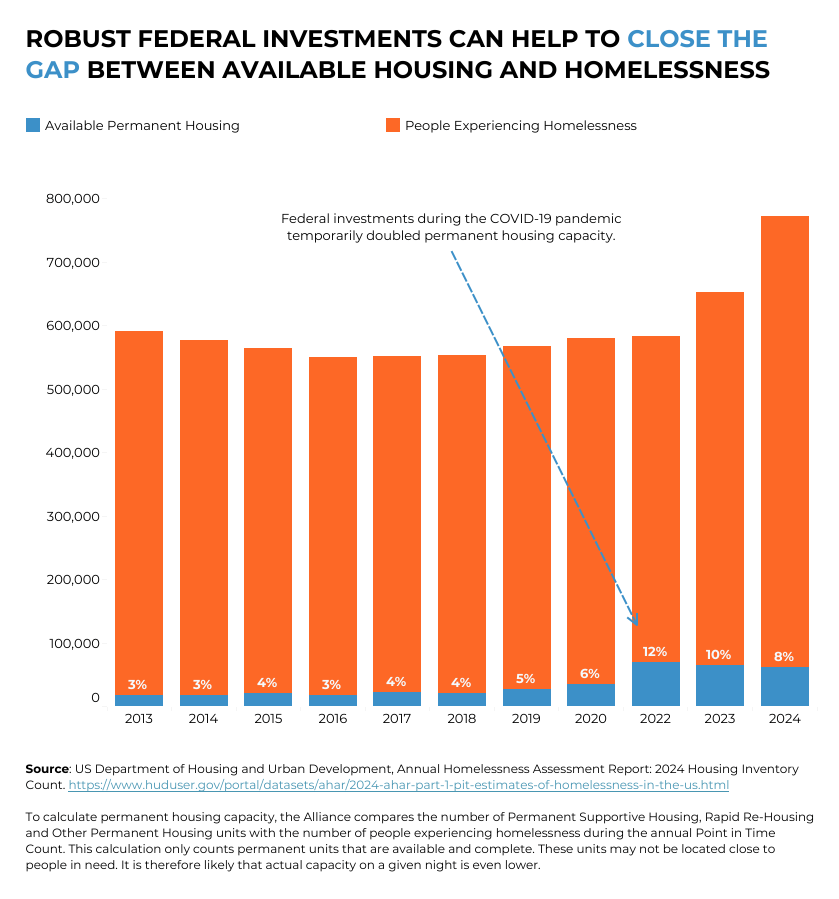
When it comes to the problem of housing affordability—which is to say, to the insufficient supply of such housing—those without a home at all tend to get the shortest shrift. Most of the public fretting is about people being forced to pay 30% or 40% or more of their already meager incomes for shelter. Or about the shelters themselves, which despite their high price tags too often are poorly maintained, inadequately insulated and ringed by sketchy neighbors. Meanwhile, those who sleep in cars, or in tents tucked into patches of vegetation behind shopping centers or supermarkets, simply drop out of sight and out of mind.

Consider, for example, the Staunton Housing Workgroup, which labored mightily over the past year to produce a list of “strategies” to put the city on the “pathway to affordable housing and housing for working families.” We apparently must gird ourselves for a long and arduous trek. As explained by city planner Rebecca Joyce when she presented the group’s strategic vision to city council a few weeks ago, “This is a plan for a start, not a plan for completion”—and oh, by the way, an additional strategy had been added belatedly to the original ten, to provide services for unhoused persons.

Why the late insertion? Because homelessness had not been discussed by the workgroup, despite such a condition being the natural consequence of unaffordable housing.

Just how sluggish and tone-deaf the city can be on the subject can be seen in the workgroup’s proposed timetable for meeting the needs of the homeless, laid out in a six-step approach divided into neat three-month segments. Step one, to run through the end of September: “Compile current list of resources and organizations that serve unhoused community members in the City.”

That should make for a busy morning.

Meanwhile, step six, scheduled for October through December of 2026, proposes to “conduct assessment of current state of needs of unhoused community members in the City and create an action plan of next steps.”

One might think that talking to the people you want to help would be a first step, not the last, but as the rest of this “strategy” makes clear, the city’s focus is on helping organizations, not individuals. As step two explicitly prescribes, for example, “Survey organizations that serve unhoused community members in the City regarding their most pressing needs [emphasis mine].” Steps three, four and five , which are identical, are all about helping organizations apply for funds.

Another example of kicking the can down the road was exhibited at the city council’s last meeting, when city manager Leslie Beauregard reminded everyone that the last budget had appropriated $50,000 for the council to use “at its discretion.” The council had been so discreet that none of the money had been spent. Perhaps the council should revisit the matter and use the funds in a productive manner? Perhaps, as had been previously discussed, some portion—$30,000 had been mentioned—of that unappropriated fund could go toward a WARM day center for the homeless “as part of a broader housing strategy”?

As summarized in the session’s minutes, “Council members agreed on the urgency in supporting the day center but questioned the need to allocate funds immediately,” which suggests the council has a creatively relaxed definition of “urgency.”  The council instead tabled the proposal and “expressed desire to invite a representative from WARM to present a proposal and budget for the day center at a future council meeting.” One can only hope that “desire” will translate into action.

The underlying problem all this illustrates is a lack of urgency or assertive leadership by city officials and staff in addressing a problem that has festered for years. Staunton’s default position is one of passivity rather than initiative, waiting for someone to bring up an issue rather than proactively intervening in something everyone knows is awry. Somnolent staff can propose an 18-month timetable for the city to reach out to “unhoused community members,” and council members uncritically accept that as reasonable.  Meanwhile, WARM will start operating its emergency overnight shelters in less than three months, but the “urgent” need for a day center will have to wait for the thinly staffed and inadequately resourced agency to get an invitation from the council to appear in its chambers.

Would it be too much for the city, having recognized a problem, to reach out to WARM directly? This week? To sit down with WARM staff and find out what’s needed, how much it will cost and who will be running the show?

Staunton’s laissez-faire approach to social needs is just as pronounced on the supply side as it is on the demand end of things. Lydia Campbell, at the Valley Community Services Board (VCSB), has been peppering the internet with emails pleading with local municipalities and social service agencies to apply for a Homeless Reduction Grant. Such grants, which date back to 2013 as part of Virginia’s Housing Trust Fund, are intended to “ensure homelessness is rare, brief and non-recurring.”   Eligible projects include “rapid rehousing for literally homeless households, innovative projects for unaccompanied homeless youth or older adults experiencing homelessness, and rental assistance and stabilization services for chronically homeless households residing in permanent supportive housing.”

The response has not been encouraging.

True, as such things go this is not a wealthy program, disbursing just $12.9 million across all of Virginia in 2023, the most recent full accounting available. But that amount underwrote 69 projects that year, serving 3,997 people. Among them was (and is) Hope House, a rapid rehousing project in partnership with the Shenandoah LGBTQ Center that serves unaccompanied homeless youth, ages 18-24. On the other hand, over the past five years only one other program application has been filed (albeit not awarded) in our four-county region, according to Campbell.

In other words, when it comes to free money to address homelessness, local governments, non-profit organizations, housing developers (yes, developers, both profit and non-profit alike) and single purpose organizations—all of whom are eligible to file applications—can’t be bothered.

The current application period has a Sept. 12 deadline, but to date Campbell has not received any requests for a letter of support, which the state requires from VCSB to prevent duplication of services. Given the late date, that seems unlikely to change, although it’s always possible that Staunton staffers have been working feverishly but unobtrusively to . . . nah. Just kidding.

Here’s a final irony. Staunton’s 2023 legislative program, an annual exercise in which the city’s governing body communicates its priorities to the Virginia general assembly, urged an increase in funding for permanent supportive housing. “The Governor’s Housing Trust Fund should become a consistent funding stream for these individuals,” council members contended.

“Just don’t make us ask for it,” they could have added.

The main question: why the break?

(Reading time: 4 minutes)

Last Wednesday I posted about the million-gallon water tank that’s being erected alongside I-81, principally to provide an adequate amount of water and pressure to supply a proposed data center at Staunton Crossing. In that column I questioned the wisdom of chasing after such a resource-hogging industry, contrasting the $10 million+ cost of the tank and its associated plumbing with the $40 million+ cost of replacing a century-old pipeline that supplies Staunton with most of its drinking water.

The next day, an unexplained break in a 16-inch water main above Stocker Street left the city and parts of Augusta County without potable water. As I write this the city has just lifted a four-day-long “boil water advisory,” which required boiling any water we could end up ingesting, as in preparing meals, adding ice cubes to our drinks or brushing our teeth. The effects of this break were significant. Schools were closed for two days, disrupting the lives of working parents. Restaurants either closed or significantly reduced service—half of Cranberry’s was in the dark Sunday morning, which was rather eerie—and businesses generally took a hit.   

The city’s response to all this was admirable, as it issued frequent advisories via email, its website, Facebook and other social media, and it quickly provided free bottled water at three dispersed locations in the city. The break was repaired within hours, and much of the subsequent disruption  was due to flushing the system and mandated repeat tests of the water for residual chlorine and bacteria. I’m sure that the response was an all-hands-on-deck affair, leaving little time or resources to address less immediate concerns.

But now that the worst of this incident is behind us, we really need to get a description of what actually happened. Nowhere in the city’s communications has there been any attempt to explain why a major water main suffered such a disastrous break—in the middle of the summer, not in the winter, when freezing often accounts for such mishaps. Was this the result of a tree uprooting? A karst topography-related ground collapse? A heavy truck rolling over an inadequately buried pipe?

Or was this a critical-point failure?

If the root cause (no pun intended) was a one-off incident, such as those I just listed, okay. Regrettable, to be sure, but also fitting squarely within the “stuff happens” matrix. But if it was the latter, if this was the inevitable result of aging infrastructure and the predictable collapse of a system long past its due date, then the implication is that this sort of thing can—and will—happen again. The only things we don’t know for sure in that case are when, and where.

As with the unanticipated but equally predictable closure of parts of the Wharf parking lot because of an eroded system of pipes and tunnels, the power of water to overwhelm our attempts to funnel, channel and exploit it requires constant attention and care. Without it, we court disaster. Yet because those attempts are largely buried underground, and therefore unseen, and because they’re so frickin’ expensive to maintain and upgrade as needed, it’s easy to devote what money we have to the next shiny thing rather than to spend it on something we already have that seems to be working just fine. Until it isn’t.

We can’t say we haven’t been warned. Staunton’s capital improvement budget, approved just a few months ago, quite explicitly listed 13.4 miles of 16-inch and 20-inch pipeline that should be replaced, at an estimated cost of $41.5 million, but the budget neither scheduled nor funded such a project. Similar unfunded nods to the necessity of such an undertaking have been made for at least the past five years, the price tag growing larger with each iteration, yet with no apparent follow-through.

It’s unclear at this date whether last week’s pipeline break lies within this stretch, although its comparable size suggests it is. But if that’s not the case, the even more troubling implication is that there’s much more work to be done than the city has acknowledged to date.

*     *     *     *     *

On a related but equally timely note, I want to call attention to today’s substack post by Paul Krugman, who despite being an astute economist has an extraordinarily accessible writing style.

While my focus last week on the resource-sucking depredations of data centers was on their thirst for water, Paul today writes about their vampire-like need for ever more electricity. Thanks to the enormous and exponentially increasing power needs of  “the cloud,” artificial intelligence and cryptocurrency, none of which are in huge demand from the general public, the electric grid and the power plants that support it face a rapid build-out that will be underwritten by, yes, the general public.

That means much higher electricity rates for homeowners and small business owners, who won’t see any return on that investment. Just one more reason, it seems, to revisit the Staunton Crossing master plan and ask ourselves just what we’re trying to achieve with it.

Let’s not send water into the cloud

(Reading time: 7 minutes)

Sometimes it’s hard to grasp just how quickly the world is changing, and how slow we can be in adjusting. Perhaps that’s not a big deal on a personal level. Tell people you don’t use a cell phone or go on social media and they’ll just think you’re quirky, or old. But being out of step becomes a really huge deal when it involves spending millions of dollars and making decisions that will have a ripple effect for decades.

Case in point: that ambitious effort to attract investment dollars, currently marked by a towering column just 350 feet off I-81, known as Staunton Crossing. By this time next summer the concrete pillar will be crowned by a ginormous billboard advertising the city, painted onto a 1-million-gallon water storage tank that will be 70 feet in diameter and, at its top, 240 feet above the ridge on which it sits.  A critical structural failure would make one helluva splash on the highway below.

The aesthetics of such boosterism come down to a matter of taste and judgment, but there should be less subjectivity regarding the water tank itself, which together with its ancillary plumbing carries a hefty $10 million price tag.  Who knew a cistern in the sky could be so expensive? For context, $10 million is enough to replace approximately one-fourth of the 13 miles of pipeline that supply Staunton with its drinking water—including, ironically, the water that will fill the new tank. Replacing the pipeline is becoming a critical issue because it’s more than a century old, but where the city will obtain $41.5 million to do the job, or an additional $8 million to drill backup wells, is anybody’s guess.

Meanwhile, although there are plausible reasons to build a new water storage tank on the east end of the city, the primary impetus for this massive venture is Staunton Crossing itself. And, more specifically, a desire by city officials to include a so-called “data center” on its freshly primed real estate. Why the scare quotes around “data centers”? Because the label, while conveying a cutting-edge sense of cleanliness and efficiency, obscures the fact that these contemporary data factories are voracious consumers of power and water, more accurately described as resource vampires.

Offices and manufacturing plants—the development’s other proposed tenants—also need water and electricity, of course, but data centers really need them. The master plan for Staunton Crossing calls for 375,000 square feet of data center space, projected to require 187,500 gallons of water a day. That compares to more than twice as much proposed square footage for manufacturing, which  would require only 12% more water—or a proposed 605,000 square feet of office space, using a mere 60,000 gallons a day.  (Moreover, most of the data center water evaporates, which means less is available for recycling—good for the sewer system, but not so good for water conservation.)

The planners who conceived this project knew all that, of course, which is why their top infrastructure priority was water. “Prospects need to know that pressure and capacity are adequate for their needs,” they wrote. “Nothing else matters more than water, particularly in the area of manufacturing and data center pursuits.”  Ergo, the water tower, enabling the city to assure business prospects that it can deliver 2 million gallons a day, as well as 4.2 megawatts of power.

But that was six years ago, and as noted at the top of this column, the world is moving ever more quickly. What seemed like a reasonable concept in 2019 has become increasingly outdated, as computer users from the smallest to the largest increasingly turn to “the cloud”—an ethereal marketing term for data centers—for their data storage needs. More recently, the post-Covid ascendance of energy-hungry artificial intelligence (AI) has blown up all previous forecasts of national power consumption.

Based on their projections for Staunton Crossing, the planners were envisioning a 10-megawatt data center, which at that time was an average size for the centers that were sprouting up in northern Virginia. But the reason why Ashburn, for example, today has 133 data centers is because these smaller centers need to cluster around a high-speed network infrastructure to reduce latency, a critical aspect of a seemingly seamless “cloud.”  On this side of the Blue Ridge, on the other hand, we still have areas without decent internet service, never mind the kind of fiber connections that would enable cloud computing.

AI’s massive energy needs, meanwhile, require hyperscale centers measured in the hundreds of megawatts. One such center currently in development in Culpeper, for example, will have 1.4 million square feet providing initial support for 216 megawatts of critical load, eventually expandable to 432 megawatts. That’s clearly a whole new ball game, in which Staunton Crossing can’t compete.

These limitations suggest that the Crossing’s quixotic pursuit of a data center won’t get out of the starting gate, too small for a hyperscale center but too isolated to plug into the cloud network. Indeed, it’s worth noting that while much of the marketing strategy behind Staunton Crossing has been to emphasize its proximity to two interstate highways, a railroad and Virginia’s inland port in Winchester, absolutely none of it addresses virtual connectivity. So: nothing to worry about, right? Unless, of course, it’s to fret about the time and money wasted on ill-fated marketing efforts, or on building a possibly over-engineered water tank.

Still, there’s always the danger that these sorts of projects take on a life of their own, lurching onward long after someone should have cut off their heads. And putting a data center in Staunton, while of debatable value in 2019, makes even less sense today. Although we’ve had a relatively wet spring and early summer, Staunton had repeated drought warnings and advisories the previous several years, underscoring the city’s vulnerability to water shortages in an age of ever more extreme climate change. Meanwhile, the 4.2-megawatts of electricity that Staunton Crossing currently promises won’t begin to address the energy needs of a data center (or a serious manufacturing plant, for that matter), which means Dominion Power will be expected to build a new transmission line—with construction costs distributed among current users.

What would Staunton get in return? Once a data center is up and running, relatively little. Local employment, as measured by vehicle trips per day, would be a scant 375, as laid out in the master plan—compared to more than 5,000 a day for a manufacturing plant, and 6,400 to 11,000 a day for office workers. More vehicle trips, more local employment.  The other potentially significant upside could be the tax revenue generated by such a capital-intensive project, were it not for the fact that taxing data centers has become a race to the bottom. Or as Staunton Crossing’s planners advised the city, slashing taxes for data centers would signal the industry “that it is specifically desired in Staunton.” Maybe that’s a signal we shouldn’t want to send.

At the very least, it would be prudent for the city to revisit the Staunton Crossing master plan and determine if changing circumstances have rendered some of it obsolete. Ditch the idea of having a data center. Perhaps revisit the idea of incorporating housing into the plan, a concept that was part of the original planning but then inexplicably dropped, and one that subsequently has become more urgent. Safeguard a precarious water supply.  

We’d still be left with one of the state’s biggest billboards, so it won’t have been a total loss. (Sorry, Lady Bird.)

If you don’t sell it, it won’t sell

(Reading time: 5 minutes)

Here’s how self-fulfilling prophecies work.

A couple of weeks ago, alarmed by the Trump administration’s decision to eighty-six every possible renewable energy incentive so we can continue burning the residue of dead plants and animals, I visited our local GM dealership. We had installed solar panels when we bought our Staunton home four years ago, and it had been my plan at that time to eventually buy an electric vehicle as well. But now, with passage of the Big Ugly Bill (no, not Trump’s cellmate), I realized that the $7,500 federal tax credit for U.S.-built EVs was about to expire. Time to get a move on!

I did my homework online, then visited the showroom. “Can I help you?” asked a helpful salesman as I strolled in. “Sure,” I replied. “Can you show me your Blazer EVs and Equinox EVs.” Silence, then, “I’d like to, but we don’t have any.”

That was a surprise for at least two reasons. Number one, the Obaugh Chevrolet dealership has scores, if not hundreds, of new vehicles on its lot; could it be that not one of them was from the nameplate’s two top-selling SUV EVs? And number two, I had walked right past a brand-new white Equinox EV parked in front of the showroom. Could it be that this car had already been sold and was simply there for servicing?

As it turned out, the Equinox was a) the only SUV EV on the lot; and b) was indeed unsold and l0oking for a buyer. But the fact that the salesman did not know his inventory was only the tip of the iceberg: he also did not know anything about the vehicle itself, resulting in a mutual journey of discovery as the two of us figured out how to take a test drive. Nor was he in some way unusual, as became achingly clear when I returned to the dealership a couple of days after buying the solitary Equinox with just one of the many questions for which I couldn’t find an answer.

The plastic key fob, as is true of all new cars with remote door openers, incorporates a thin metal key that can be withdrawn and inserted into a door handle for access in case the battery goes dead. That’s helpful. What’s not helpful is the lack of any guidance on where that insertion should be made, since the Equinox door handles are flat and recessed and don’t have any holes, obvious or otherwise. (Trust me: I looked a long time before making a fool of myself by returning to the dealership with so silly a query. I shouldn’t have worried.)

What ensued looked like a Keystone Kops segment, with first one, then a second, than a third and fourth dealership employee converging on the Equinox in response to their co-workers calling for help. Two frantically scrolled through their cellphones, while one leafed through the scanty documentation that GM now grudgingly provides for its vehicles. The fourth peered at the emergency key with the kind of fascination with which early primates pawed at the obelisk in 2001: A Space Odyssey. The 20-page booklet, with less information than comes with a new microwave, clearly showed how to fit the key—if you were trying to get into a Cadillac Lyriq, which in addition to having a much heftier price tag has door handles that aren’t as cool as those on the Equinox; they have key holes.

Eventually, after about 20 minutes, the mystery was solved. The Equinox’s mystery key hole is nowhere near the handles it unlocks. It’s in the back, on the bottom left edge of the trunk lid, visible only if you lie on the ground and look up. It’s covered by a plastic cap that must be pried off. What could be less intuitive?

Early on, while filling out the purchase papers, I commented to the person taking my money, “Well, I guess you don’t sell many EVs.” “No,” he replied, “we just don’t have much demand for them.”

I can see why. Reminds me of the probably apocryphal story of the shoe company, looking to expand its market, sending two salesmen to different parts of Africa. The first quickly wired back (this is an old story), “Wasted trip! No one here wears shoes.”

The second took a little longer, but eventually wired: “Crank up production! Great market—no one here wears shoes.”

P.S. The Equinox is a wonderful car, although making the switch to an EV takes some getting used to: it’s basically a computer and large battery on wheels. But it’s super quiet, handles well, accelerates briskly and has a range of more than 325 miles on a full charge. Best of all, after the tax rebate, a $1,000 discount because of my Costco executive membership and an additional $1,500 dealer discount, the bottom line was less than $27,000. That’s really hard to beat—but the federal tax credit expires at the end of September.

As for my other questions, I realized trying to get them answered by the dealership is a waste of time, since it knows as little as I do. I did find and download a 361-page manual online, though.

Tell ’em the Greeks sent you

(Reading time: 7 minutes)

Throughout all the various discussions of the past year about how best to cope with the SAW region’s shortage of affordable housing, most attention has gone to the “housing” half of that phrase. ADUs, modular construction techniques, pocket neighborhoods, land banks and land trusts, restrictions on short-term rentals—all these and other strategies that have been kicked around have focused, by and large, on how best to increase housing supply. Comparatively little attention has been given to the issue of affordability.

That may simply reflect the intractability of the problem. Housing can be made more affordable either by increasing wages or by lowering the cost of homes—but raising wages is a much bigger socio-economic challenge than even the most dedicated housing advocates can tackle. And efforts to lower the cost of housing sooner or later encounter an inherent paradox: housing in the U.S. is both a consumption and an investment good. Enhancing one almost invariably diminishes the other, which is why efforts to introduce cheaper (i.e. affordable) housing so often encounter fierce resistance from established homeowners, who see their property values under attack.

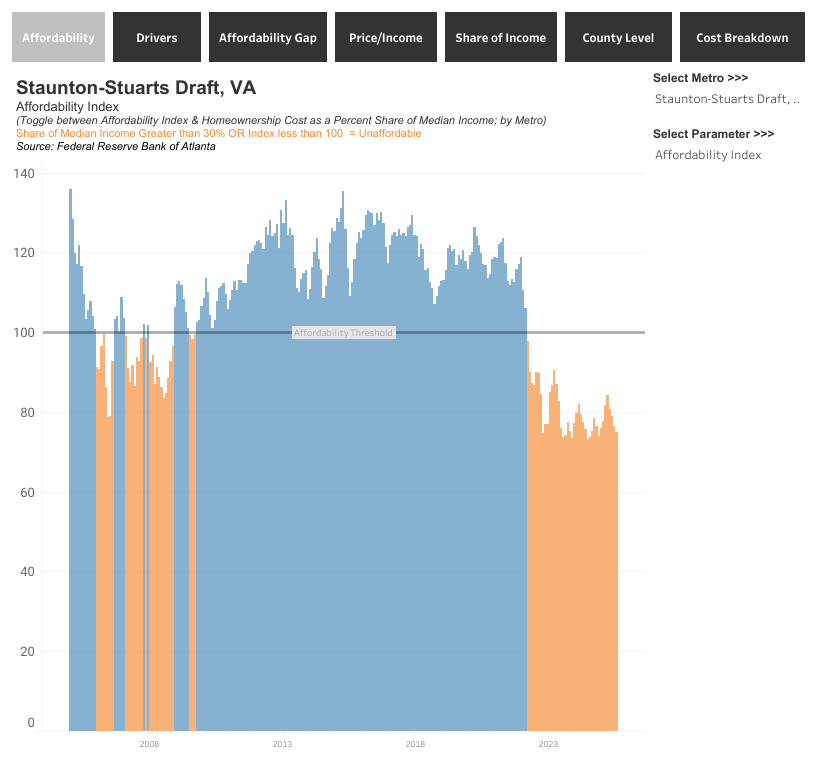
The result has been an increasingly pricey real estate market, defined by tight supply and constantly rising prices, both nationally and locally. Last year, for example, homebuyers on average were paying more than five times their annual incomes for a home, up sharply from 1965, when their purchase price was less than three times income. The average age of the first-time homebuyer was 35, up from 31 just 10 years earlier. Unable to affect labor market economics and equally ineffectual at promoting cheap housing, affordable housing advocates frequently are left agitating simply for more housing, in the forlorn hope that increased supply may by itself bring down prices. So far, it hasn’t worked out that way.

So what’s to be done?

One possible starting point is to look at how new construction is financed. For developers, site acquisition costs may represent just 10% of projected outlays, but that cost comes up-front, before any money comes in, and therefore often is financed through loans. Not only does that make the outlay more expensive when interest rates are high, but land acquisition loans are an overhang that grows with every construction delay, whether caused by permitting issues, bad weather, supply interruptions or labor shortages. Meanwhile, there are only a limited number of financing sources, including government, banks and possibly local lenders, and in our area government funding for housing is not only scarce but increasingly precarious.

But we’re not the first society to face this conundrum. Consider the Greek city of Athens, which just 200 years ago was a “ramshackle village” of perhaps 4,000 residents. It grew steadily over the next century, but an influx of Greek refugees from Turkey upon dissolution of the Ottoman Empire more than doubled the population in just a few months, to 500,000. That was followed by World War II, which devastated the city’s housing stock, after which migration from the countryside again doubled the population. By the late 1940s, Athens was home to more than a million people with insufficient housing and few job prospects, and what housing was available tended to lack basic plumbing or heating.

Against that dismal backdrop, the Greek population—not the government—developed an informal approach to housing called antiparochi, which roughly translates as “mutual exchange,” also sometimes described as “flats for land.” As explained by the BBC in 2019: “Here’s how it worked. A contractor would approach the owner of a house and offer him a deal. He would knock down his house, and build a block of flats in its place. In return, the homeowner would be given a certain number of flats (usually two or three), while the contractor would then make his money by selling the remaining flats to Greeks who were seeking accommodation.”

Such an arrangement, in which no money was exchanged (and, indeed, without the protection of a contract) was largely ignored by the government for more than 20 years, with only minor regulations, such as height limitations and a ban on building over archaeological sites. The result was a win-win-win on multiple levels. The government was able to focus its limited resources on developing infrastructure. The original homeowner realized the equity in his property by having not only a new home—with plumbing!—to live in, but with a second or even third home that he could rent or sell. The builder could start construction with minimal upfront outlays, funding his construction expenses with deposits from prospective buyers only too eager to lock in a home. And as home building took off, the resulting construction boom energized the Athenian economy.

As might be expected, such a free-for-all wasn’t entirely a one-sided success story. As the antiparochi phenomenon became more widespread, architect-free construction became so standardized that the Athenian landscape was transformed into a bleak monotony of drab concrete blocks that still shocks first-time visitors. Developers began cutting corners, not just by eliminating decorative elements but by using insufficient or substandard materials. Yet as the population kept surging, reaching almost two million in the late ’70s, the antiparochi approach kept pace, with housing bank loans comprising just 16% of gross capital formation. And today, the Greeks’ homeownership rate is roughly 65%—almost exactly that of the U.S.

The antiparochi approach eventually was undone by government imposition of an 18% value added tax, applied to the apartments the original homeowners received from the builders. The government also ended a policy that had taxed property transfers but not new construction, which had disincentivized the buying of existing buildings. Behind the changes was at least some civic guilt. “Most people thought that antiparochi was bad for the city and that it destroyed the architecture of the city, but that is not entirely true,” contends Elxis, a contemporary Greek real estate service. “The antiparochi system provided a roof for very low-income families in Greece, who lived in a country without a housing policy.”

Whether the antiparochi approach would work locally is, of course, debatable. The tax policy that led to its near demise in Greece already exists here: while the U.S. tax code allows a swap of one real estate investment property for another while deferring capital gains taxes under Section 1031, there is no such break for homeowners. Nor would the rough-and-tumble approach to building in Athens go down in a society of building codes and inspections. Our shortage of affordable housing doesn’t approach the deprivation faced by post-war Athenians, which pressured government officials into their hands-off attitude.

Yet for all those differences, the Athenian experiment demonstrates that a fresh way of looking at problems can yield unexpectedly creative solutions, and that innovation can be stifled by overly restrictive policies. There are lots of things Virginia’s local governments can’t control, in a state that maintains tight control over most municipal decision-making, but zoning restrictions remain largely within their wheelhouse. So do many tax policies, especially having to do with real estate and personal property. The challenge, therefore, is to look for ways to modify zoning and tax codes in such a way that property owners can unlock their equity productively.

Consider, for example, the large number of Staunton homes built half-a-century or more ago, many occupied by aging empty-nesters who would like to down-size—but who can’t afford to move to a smaller, more manageable home because their own aging property hasn’t sufficiently appreciated in value. How much of the city’s housing stock deteriorates each year as those house-rich but cash-poor couples—and widows and widowers—are unable to upgrade and maintain their property? How much real estate potential is being wasted for lack of anything like the Athenian model?

Houses of God, homes for people

(Reading time: 8 minutes)

New York City is undergoing a “transformational” change in its commercial building sector, The Wall Street Journal reported yesterday, with a projected 40 million square feet of offices scheduled for conversion into apartments and other uses over the next five to 10 years. That’s a huge amount of residential space in the offing, but while New York is an extreme example, it’s hardly alone: the pace of office conversions is picking up across the country, “thanks to the rapidly falling prices of obsolete office buildings, changes to zoning rules that allow for more residential construction, and government incentives that help bring down costs.”

All well and good for white-collar metropolitan areas, you might think, but of what relevance is that to a small, tourist-oriented city like Staunton (or to blue-collar Waynesboro)? It’s not like our diminutive urban cores are bursting with empty space abandoned by accountants, financial managers, software developers, research analysts or other practitioners of the “knowledge economy.”  True enough—but here’s what Staunton has that New York doesn’t: a bumper crop of churches, many of which are similarly hollowed-out.

There are 76 of them in Staunton, by one local clergyman’s count. Big churches, little churches, old churches, storefront churches—one church for every 334 Stauntonians, or roughly three times the national average. That’s not because we’re more sinful (although we might be) but simply a result of having been around longer. The result is predictable: while some churches have robust congregations and full calendars, many are lucky to get more than 50 people in their pews on Sunday mornings. We have churches so diminished that they have to share a minister, and churches that have been deconsecrated by congregations that finally couldn’t deny the handwriting on the wall. The rot, all too often, is sinking in.

It’s not just deteriorating church buildings that are going to waste; so is the land they sit on. While some churches have a footprint scarcely smaller than the plot they’re sited on, others own sprawling empty parking lots and overgrown greenery that at their worst contribute to a sense of urban blight. Consider the Marquis Memorial United Methodist Church, which except for one small corner parcel owns an entire city block fronting West Beverley, as well as half-a-dozen vacant house lots across Stoneburner. Much of its two-plus acres sits empty—as does a small, strip-mall type of building that also sits on church land but is used solely for storage—contributing to the overall run-down appearance of the West End.    

Although there does not appear to be a comprehensive survey of church properties in Staunton, the Virginia Interfaith Center for Public Policy last November released a study looking at land in Virginia owned by faith-based organizations. Among its findings: that of more than 4 million parcels in the state, 22,543 are owned by such organizations, totaling more than 74,000 acres. “To put this in context,” it noted, “the City of Richmond is roughly 40,000 acres, meaning the identified parcels amount to nearly twice the size of Richmond.” (Staunton, by comparison, comprises roughly 12,500 acres.)

Some of those parcels, as noted, barely exceed a church’s footprint. But 51% exceed half an acre and 38% are larger than one acre, which the report contends is big enough to suggest “meaningful development potential” for housing. And while the study isn’t granular enough for our portion of the state to tease out Staunton-specific statistics, it does report that the Central Shenandoah Planning District, which encompasses the SAW region, has 970 parcels owned by faith-based organizations, totaling 2,741 acres. The median size of these parcels is 0.69 acres, or less than one-third of the Marquis Memorial UMC property—or one-seventh the size of the five-acre parcel occupied by the Christ United Methodist Church, which has more than a thousand feet of frontage on Churchville Avenue.

There apparently is no comparable inventory of church buildings themselves, although national statistics are suggestive. A denomination in one unnamed state, cited by consultant Richard Reinhard (about whom more to come), rated 20% of its 530 churches in “critical condition” (not paying their bills) and an additional 40% in “serious condition.”  Or consider the city of Gary, Indiana, which has only 67,000 residents—after decades of decline from a peak of 178,000—but more than 250 empty churches, according to its planning director. Staunton has a more stable population, but that hasn’t insulated it from an overall decline in church membership, and even more sharply so among younger generations. That means that not only are congregations getting smaller, they’re also greyer.

The consequences of these trends vary, and are complicated by other factors. The 75-member Allen Chapel AME congregation, for example, decided to move out of its West Beverley church in 1997, ostensibly because of limited parking and poor accessibility for the handicapped—conditions that were hardly new in 1997 but which became less tolerable as churchgoers aged; that building now houses two Airbnb rental units. But the Bibleway Community Church, directly across the street, appears to have been sitting vacant at least since 2020, when it was purchased by a woman who currently has a West Virginia address. How many other Staunton churches are in similarly precarious circumstances?

Rick Reinhard, quoted above, is former chief administrative officer of a social justice agency of the global United Methodist Church, where he first started grappling with many of these issues. These days he is chief consultant for a Rockville, MD-based group that among other things advocates for a fledgling YIGBY (Yes in God’s Backyard) movement to use church real estate—whether the land or the building itself—for affordable housing.

“Religious faiths face a great mismatch between small, aging congregations and large, deteriorating properties,” he wrote last year. “Developing intelligent reuses and redevelopment of these properties will make the difference between a community flourishing and struggling. Housing advocates view underused faith properties as natural sites to develop projects that help close the great national gap on affordable housing.”

Yet as Reinhard concedes, convincing congregants to convert their houses of worship into houses of a more conventional nature is a huge task: “All too often houses of worship are stricken immobile by their declining congregations. Convincing an elderly congregation to close or even alter the sacred places where they were married, their parents were memorialized, and their children were baptized can be a heavy lift. Faith leaders are schooled in neither real estate nor finance in divinity schools, and sometimes find it anathema to their beliefs.”

For all that, a growing number of churches find themselves in the same financial position as someone working for less than a livable wage, just one leaky roof or burst boiler away from closing. Reinhard estimates it costs upwards of $7 a square foot annually to operate a church (which doesn’t pay real estate taxes), which means a modestly sized 10,000-square-foot building will eat up approximately $70,000 a year just to adequately maintain the structure. Small wonder that older, declining congregations are worshiping in crumbling buildings, or—ironically—that “Small burghs are discovering that the churches found front and center on their towns’ postcards [sound familiar?] are falling into disrepair with uncertain futures.”

A few congregations locally, although none in Staunton, are showing what else is possible. In Roanoke, the former Belmont Baptist Church was converted into affordable apartment units that hit the market late last year. And Trinity United Methodist Church, also in Roanoke, started converting its Sunday school building into 15 affordable rental units this past February. Seven of the units will be reserved for seniors coming out of homelessness, while the balance will be rented to older couples on limited incomes. Prompting the move was a recognition that the dwindling congregation could no longer afford routine maintenance and insurance costs, much less pay for repairs to the sanctuary’s leaky plaster roof.

“Our building was no longer serving us, it was the master of us,” the church’s pastor told a reporter.

Closer to home, meanwhile, the former Wayne Hills United Methodist Church in Waynesboro is now owned by Embrace, a church-affiliated non-profit that has repositioned the property as a community center and food garden. Last year it hosted “Blitz Build 2024,” during which nine tiny homes were built in nine days to house otherwise homeless people in the region. This year its director, Jenelle Watson, is developing a more ambitious plan for approximately two dozen homes to be sited on a third of the 3.3-acre parcel, also for people transitioning out of homelessness.

The conversion of New York’s temples of commerce into affordable housing may seem of remote interest in Staunton, but we would do well to pay heed. “The acceleration of office conversions won’t sharply reduce the overall supply of office buildings any time soon,” the Wall Street Journal acknowledged. “But conversions are already starting to benefit neighborhoods where they take place. By bringing in new residents, these projects are restoring street life, shopping and entertainment venues where obsolete office buildings used to stand.”

As much could be said of Staunton’s less secular temples—with, of course, the added benefit of creating much needed housing.

West End: nothing to BRAG about

(Reading time: 7 minutes)

For anyone looking to understand why civic improvements in Staunton move at a snail’s pace, a good place to start one’s education is with the West End.

Long recognized as the city’s neglected quarter, its vitality sapped by construction of the Woodrow Wilson Parkway decades ago, the West End was targeted by the city council in 2020 as a “high priority zone” for revitalization. That same year, the city applied to the EPA for a three-year, $300,000 Brownfields Assessment Grant.  The purpose of the grant, as explained by city staff, was “to return vacant or underutilized properties to productive reuse” by assessing for possible environmental hazards, often from industrial waste but also from asbestos, underground gas tanks, lead paint or other contamination.  Site remediation would then “incentivize investment and jumpstart redevelopment and area-wide revitalization.”

Initial progress was promising. The EPA signed off on the grant the following spring, with the study scheduled for completion by September 30, 2024. Draper Aden Associates, a Virginia-based consulting engineer, was retained for the heavy lifting. And in keeping with an announced emphasis on “community engagement,” the city and its consultants planned a series of public meetings over a six-month period “to position the impacted community at the forefront as champions for these revitalization initiatives.”

Study oversight and community engagement was to be provided by the Brownfields Redevelopment Advisory Group (BRAG), a consortium of nine “partners” that would “take an active role in leading the City’s Brownfields Program.” Several BRAG members—including the Valley Mission, the Salvation Army and the Staunton Redevelopment/Housing Authority—dealt with housing issues, holding out the promise that this would not be a neglected focus in a process that could easily favor commercial interests. The West End Business Association and Staunton’s West End Alliance, meanwhile, were singled out as being “strongly committed to the preservation and revitalization of West End and will take an active role in leading the City’s Brownfields Program.”

Indeed, BRAG was to play a crucial role in ensuring that the West End wouldn’t simply become a colonial outpost for a bunch of remote planners parachuting in. It would “meet quarterly to assist City staff in site selection and cleanup/reuse planning,” according to the grant application, which added that BRAG and the city would involve representatives “of neighborhoods most directly impacted by proposed redevelopment projects.” Moreover, “partner organizations like the Salvation Army and Valley Mission will represent disadvantaged communities to communicate their needs and disseminate information, which will be beneficial for constituents with limited internet and/or phone access.”

But of course, man plans and God laughs.

Four years on, the brownfields study is still incomplete. Draper Aden Associates has been gobbled up by a larger firm which, if city staff are to be believed, is extremely slow in responding to information requests about its activities. The planned series of public hearings was severely whittled down over Covid concerns. And BRAG? Never happened. The West End Alliance apparently no longer exists as a separate entity. The other BRAG “partners” never met as a group, had nothing to do with selecting brownfield sites for study, and indeed seem largely ignorant of their supposed role.

The disadvantaged communities presumably remain just that.

THERE IS ONE SILVER LINING to this $300,000 brown cloud, and that’s the redevelopment of the former Chestnut Hill Shopping Center. As it happens, this was one of three “priority” sites identified by the grant application because of “their potential to catalyze additional investment and revitalization of West End, as well as to extend redevelopment opportunities.”  That the vacant shopping center happened to meet the city’s need for some place to build a new courthouse was a fortuitous accident, not the result of careful planning, but you take your wins where you can. Will a courthouse turn out to be the best use of that property in the interests of West End revitalization?  Maybe, maybe not, but in any case a moot point now.

But what of the other two “priority” sites that were identified by the grant application, carefully picked from among more than 25 candidates chosen for their “potential to change the blighted landscape and revitalize the stagnant economy in the target area”?  The first is a one-acre site of a salvage yard that closed in 2011, apparently targeted because of its high potential for contaminating Lewis Creek with heavy metals, PCBs and volatile organic compounds. In other words, not much redevelopment potential but a possible environmental disaster if not attended.

The third of the three sites, however, amounts to an enormous blank slate that could accommodate the most ambitious of developments. Bounded by Morris Mill Road on the north and east, the former Unifi Manufacturing site spans approximately 50 acres and has been vacant since 2008. Immediately to its south is a vacant, wooded tract of an additional 27 acres, which backs onto a Food Lion supermarket, while a connecting vacant lot on the east side of the Food Lion could give direct access to West Beverley Street. Ware Elementary and Shelburne Middle schools are within easy walking distance.

All of which is to say, the West End has a void that screams for development. City maps of the West End core study area and of a proposed enterprise zone look like an upside-down saucepan, with the handle running from downtown along West Beverley, then flaring out along Morris Mill Road to the city boundary. The West End Revitalization Plan has a map on page 28 that includes a large green area, matching exactly the description provided in the preceding paragraph, labeled “redevelopable parcels.”  As the grant application summarized, “the site’s proximity to schools and residences make it a high priority for investigation and redevelopment.”

Indeed—but no. The UniFi site is history. Just don’t try to figure out why.

Consider the grant application’s effusive embrace of community engagement: “To maintain progress throughout the grant period, the QEP [Qualified Environmental Professional] will prepare monthly reports to the City and BRAG in compliance with the approved EPA Cooperative Agreement Work Plan, which will summarize activities, e.g. milestones achieved, issues encountered, and budget/schedule updates. These will be used to gauge progress, communicate with constituents and prepare quarterly performance reports.”

Those quarterly reports, however, are too sketchy to be of use to anyone. For example, the decision to extend the initial three-year grant by an additional year is described thus: “An Extension Amendment Request was submitted to EPA as well as updated contact sheet siting a new Grant Recipient Representative.” No reason given why more time was needed—but at least the change was noted. Not so for the UniFi site, which after more than a year of investigation, abruptly dropped off the radar at the end of 2023. The quarterly reports don’t even acknowledge the deep-sixing of its largest “high priority” site, much less a reason for the radical change. On the other hand, the quarterly reports do make sporadic mention of other possible brownfields sites, such as Don’s Auto Repair and Gypsy Hill Park, but again without any explanation.

Does anyone living or working in the West End have the slightest idea that the brownfield study is still chugging along? Highly unlikely. But just as much in the dark are city leaders and planners, all of whom—from council members to the city manager to the head of the planning department—are new to their positions since the grant application was submitted and unable to answer even basic questions, such as why Gypsy Hill Park belatedly became part of a West End brownfield study. This is a ship that has been set adrift, and one can only hope it will eventually touch shore undamaged.

The good news, if one can call it that, is that as of the end of March the study had eaten up only 54% of the original grant money. Of course, that does raise the question of how the city will reasonably spend the remaining $138,000 before Sept. 30—or whether it will seek yet another extension. Maybe it should turn to the West End’s residents for answers. Just don’t look to BRAG for help.

Seeking your thoughts—kinda

(Reading time: 7 minutes)

It’s a fair guess that most Stauntonians have never heard of the city’s comprehensive plan, much less seen it, and that’s not really surprising. The 450-page document states quite explicitly on its cover page that it was prepared for the Staunton Planning Commission, which makes it sound more arcane than it is. The current version is five years old, so a whole lot of water has gone under the bridge—quite literally, in the case of downtown—since it was drafted. And all the people who you might expect would be most involved in its implementation are no longer there: every city council member, the city manager and the city’s director of community development have moved on since the plan was completed.

Then again, much of Staunton’s Comprehensive Plan actually doesn’t, well . . . plan anything, so it’s easy to ignore. While the Commonwealth of Virginia requires every municipality to prepare such plans “with the purpose of guiding and accomplishing a coordinated, adjusted and harmonious development of the territory,” the Commonwealth Code also states that that the plan should be a survey of that municipality’s assets and challenges—and that’s the basket in which Staunton placed most of its eggs. The result is more descriptive than prescriptive, an inventory of the Staunton that existed in 2018 but with few attempts at guidance for the near future, never mind to the plan’s supposed end date of 2040.

But now we have a chance for a do-over. Starting last year, city staff, consultants and a small group of Staunton residents have been revising the plan to make it more up-to-date and, we can hope, make it more of a planning tool than it has been. That process has included seeking input from Stauntonians as to what they think should be in the plan, through online surveys and a series of public meetings, and the next such meeting—an open house at Staunton High School—is less than a month off. Anyone concerned about the city’s future should make an effort to be there: Wednesday, June 25, between 5:30 and 7 p.m.

That said, I wouldn’t be my usual curmudgeonly self if I didn’t add a cautionary note. Despite the city’s apparently diligent attempts to solicit public opinion about various plans, these efforts often have an unfortunately performative aspect to them. The ritual involves lots of easels covered with large white sheets of paper, lots of small stick-on dots in various colors, and an abundance of post-its of obviously limited size on which to scribble fresh ideas. Those in attendance are asked to respond to various questions about whatever the city thinks should be of greatest concern to them, and the answers are subsequently collated, summarized, mentioned in final plan documents—and, generally, thereafter ignored.

Does that sound harsh? Consider, then, the West End Revitalization Plan, completed last summer and subsequently adopted by the city council. That plan also went through a pro forma attempt to get input from West End residents, including public meetings and an online survey. The meetings made it abundantly clear that public “concerns about property upkeep and affordable housing” were among the area’s most notable “challenges.” The online survey disclosed that of eight possible concerns, West End respondents thought that “improved upkeep of existing housing” was the second most “important” or “very important,” just four votes behind the 194 cast for “adding new shops, stores and services.”

How seriously were those views taken? The final, adopted plan is big on retail improvements but scarcely gives a nod to housing concerns. Indeed, only one of 17 proposed actions in the plan directly addresses housing rehabilitation, and does so in the most dismissive way possible by suggesting simply that the city “connect residents to existing resources.” Which is to say, the West End doesn’t have a problem with property upkeep and affordable housing, it has a communication problem.

It therefore will be interesting to see to what extent public input registers in this far broader, city-wide planning document. One possible marker was provided by the Jan. 22 open house, the first of three, when 106 local residents registered their attendance (although city officials believe the actual number attending was higher) and repeatedly voiced support for mixed-use development. Attendees emphasized “the need for mixed-use areas that integrate homes, shops, and parks to create vibrant neighborhoods,” according to a summary of comments under “land use.”  Similarly, in a summary under “economic resources & development,” attendees “highlighted the need for increased mixed-use development and support for small businesses in less densely populated areas.”

The summarized comments about housing, meanwhile, illustrate an increasingly sophisticated understanding of what it takes to create a truly dynamic community. Attendees “highlighted the need for affordable housing for their workforce, concerns about rising prices, the lack of options for low-income and middle-income households, and . . . a pressing need for better connectivity between residential areas [and] increased density of housing.”

The emphasis on mixed-use developments and increased housing density, in a city largely mired in a century-old land-use philosophy known as Euclidean zoning, is in some ways revolutionary. Euclidean zoning (the name comes from a village in Ohio, not the Greek mathematician) separates land uses by type—residential, commercial, retail, industrial, etc.—each into their own zones or areas. That may be desirable in preventing a factory or a slaughterhouse from being plopped down next to a church or apartment complex, but it also creates the largely fragmented land-use pattern we have today, with the notable exception of downtown. Add to that a residential zoning preference for detached single-family homes, with broad swaths of the city’s 20 square miles zoned R-1 (maximum of three homes per acre) and R-2 (maximum of five), and the result is a pleasantly bland, dispersed suburban landscape on which builders can’t afford to build homes for low- and middle-income families.

One possible work-around for developers is to seek special use permits so they can build the mixed-use and denser housing that city residents attending these sessions say we need—but for several presumably obvious reasons, that’s not an attractive option. Nor is it happening in any meaningful way. The alternative, therefore, is for those working on the comprehensive plan update to rework the city’s zoning code—to revise the rules and maps that keep things the way they are—so that standards for higher density and mixed-use developments are written into the code, creating “by right” options for developers. No more having to say “Mother, may I please?”

Whether that in fact will happen is . . . let’s just say not likely. One problem with these sounding-board sessions with the public is that they come at a time when the plan revisions are already well underway, so there’s a natural resistance to taking on big new projects—and rewriting zoning ordinances is just about as big as they come. Then there’s the problem of public backlash. Although the Stauntonians attending these open houses may be largely in favor of such changes, they also tend to be more actively engaged in civic affairs than the majority of the population—and a lot of those folks would be aghast at the idea that there could be a wholesale reordering of the land-use landscape ( just one of the problems facing developers seeking special use permits). Winning them over, or at least muting their resistance, would take time, public education and reassurance.

So I’m not optimistic that these open houses and other attempts to solicit public input will make any meaningful difference. The ship’s course is fairly well set, and any comments that might adjust its bearings are no more likely to change the outcome than occurred with the West End Revitalization Plan. But still. The arguments are worth making, if only to lay one more brick against the day when they finally will make a difference.